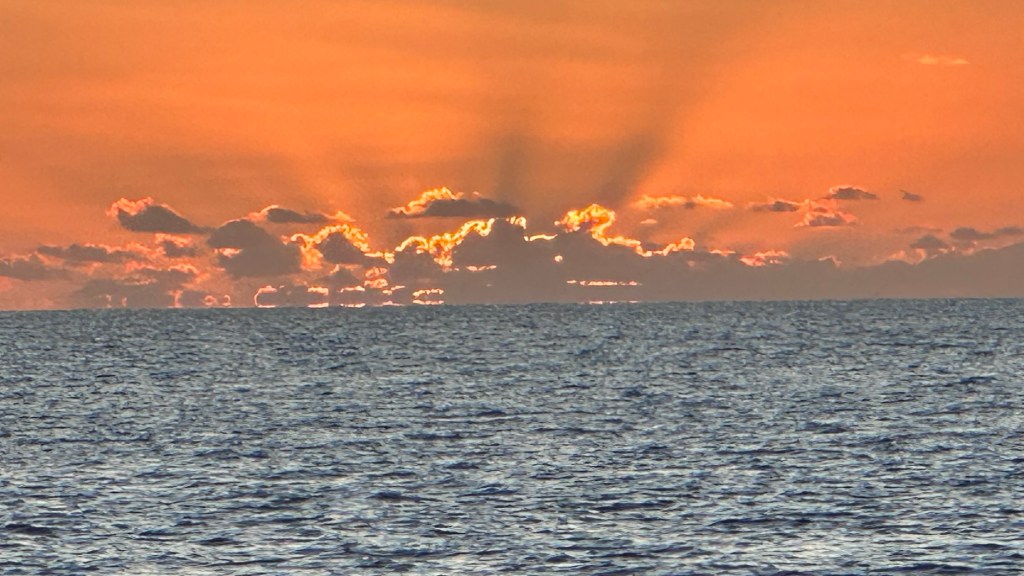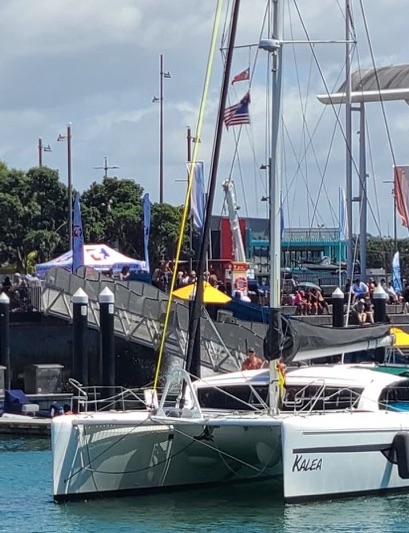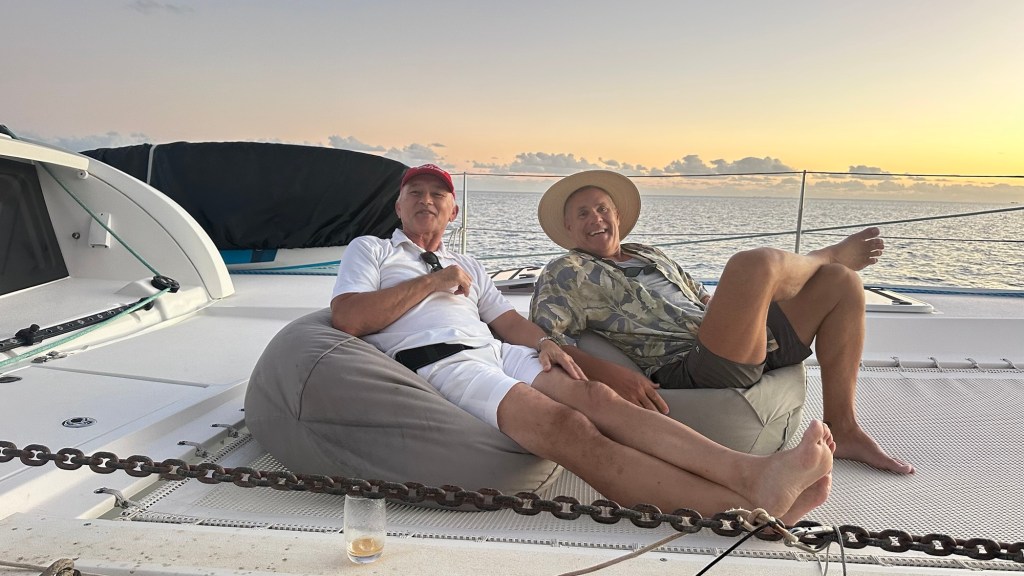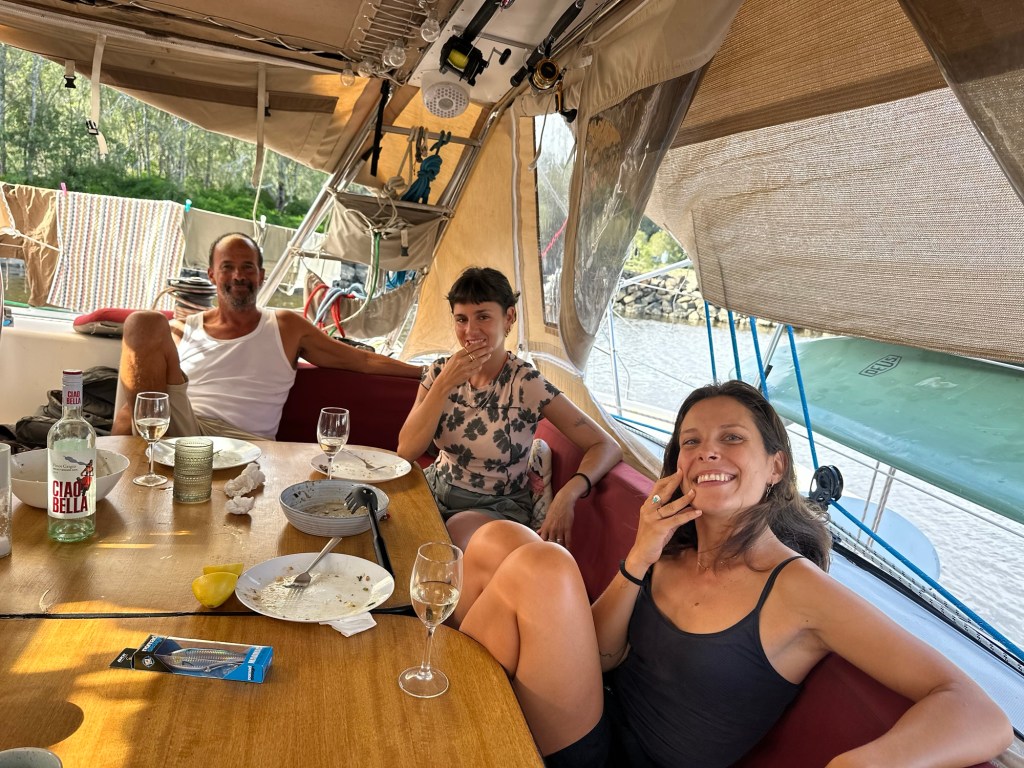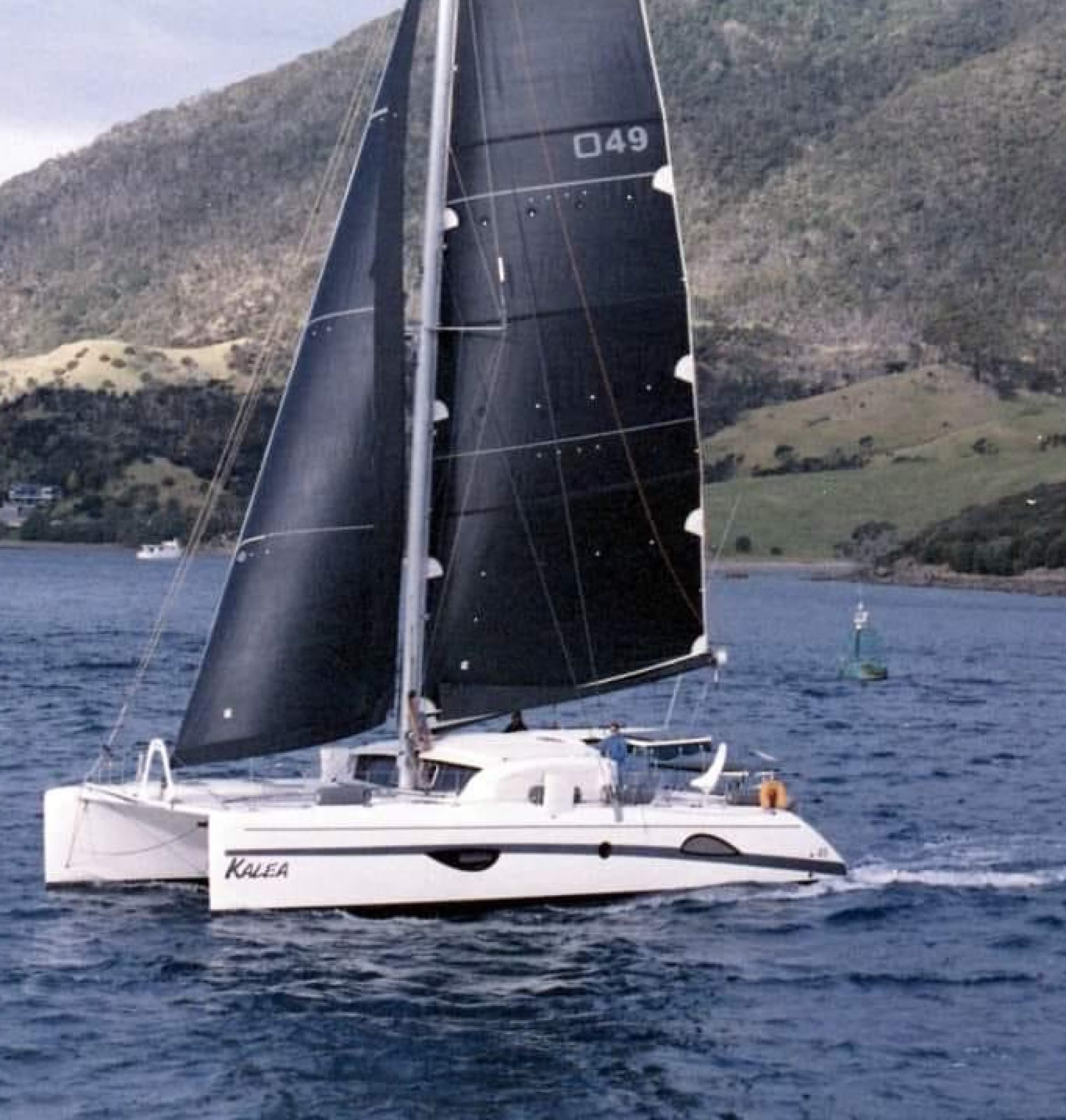
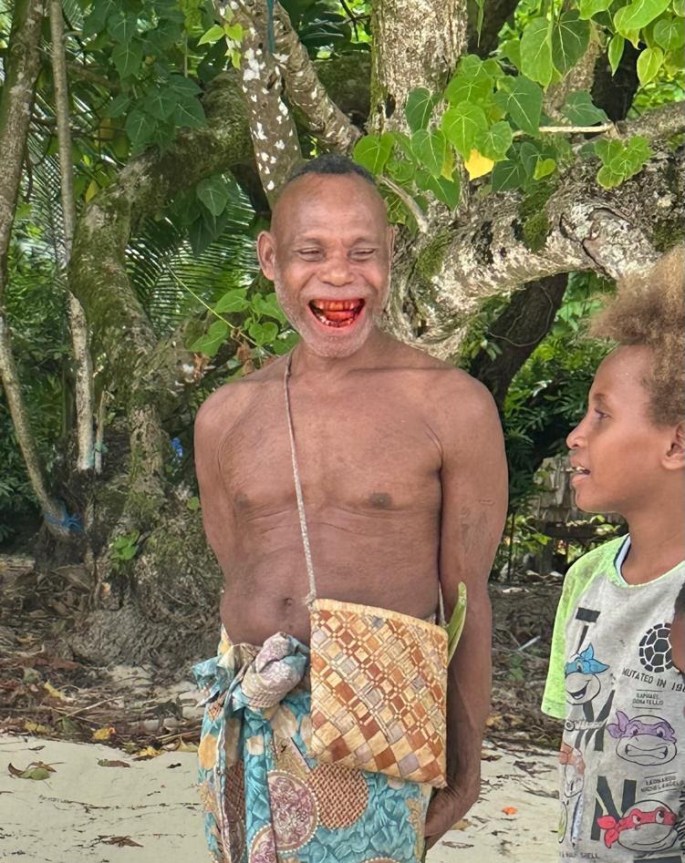
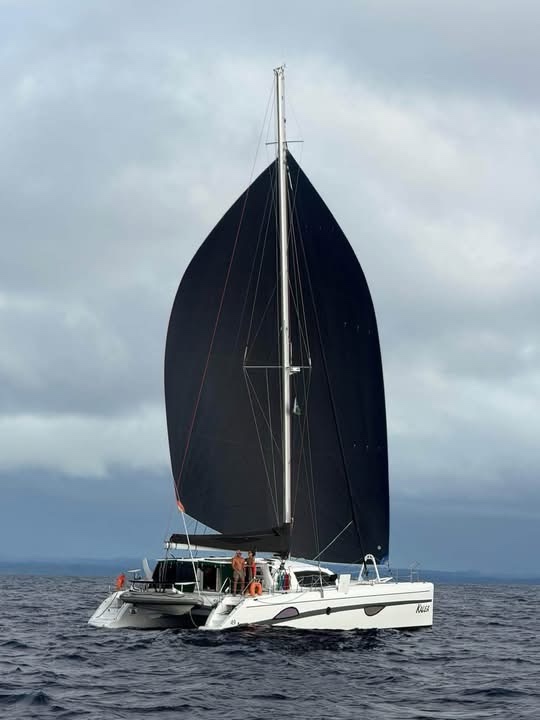
Goodbye Solomon Islands, headed to Papua New Guinea; our 12th country visited by sailboat!

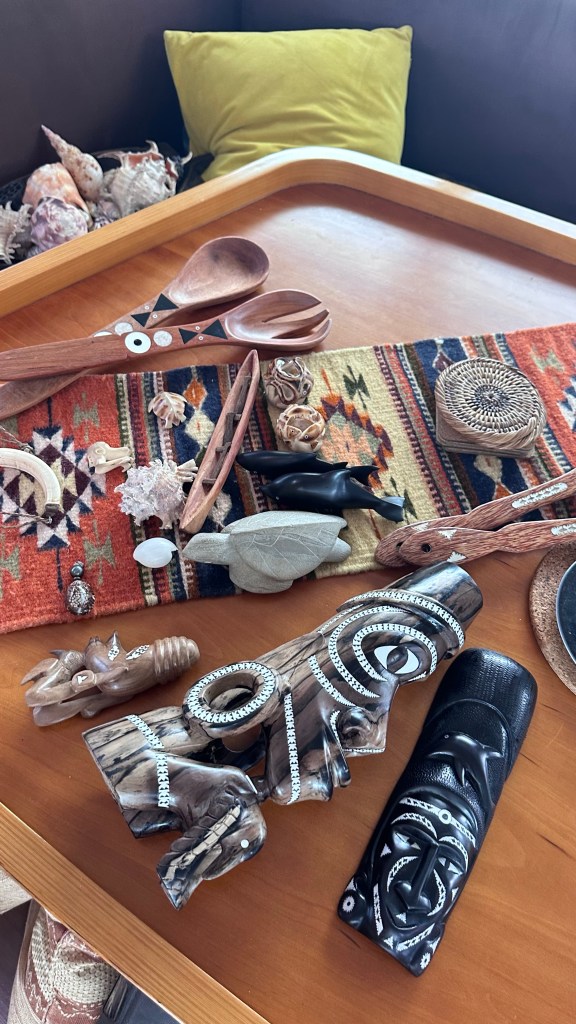
Wow, what a huge learning curve these last 5 weeks in the Solomon Islands have been. One thinks by this age you can make generalities about human beings. Well, culturally speaking, we have been humbled to the core. Traveling to these remote areas with 0 tourism nor external influence gave us a new perspective on human possibility. Unthinkable, genuine hospitality, kindness, joy, creativity, humor, care, and compassion for all! The Solomon people have a calm tender/sweet style, so friendly in nature, and warm welcoming hearts. They have big families, not much need for money, and usually 5 or more children each. Food is practically falling off their trees and gardens. Most families in the Morovo Lagoon area have at least one carver craftsperson in their greater family. Their carvings were spectacular with fine detail. We traded food or clothing for a few special pieces that we will take home. 
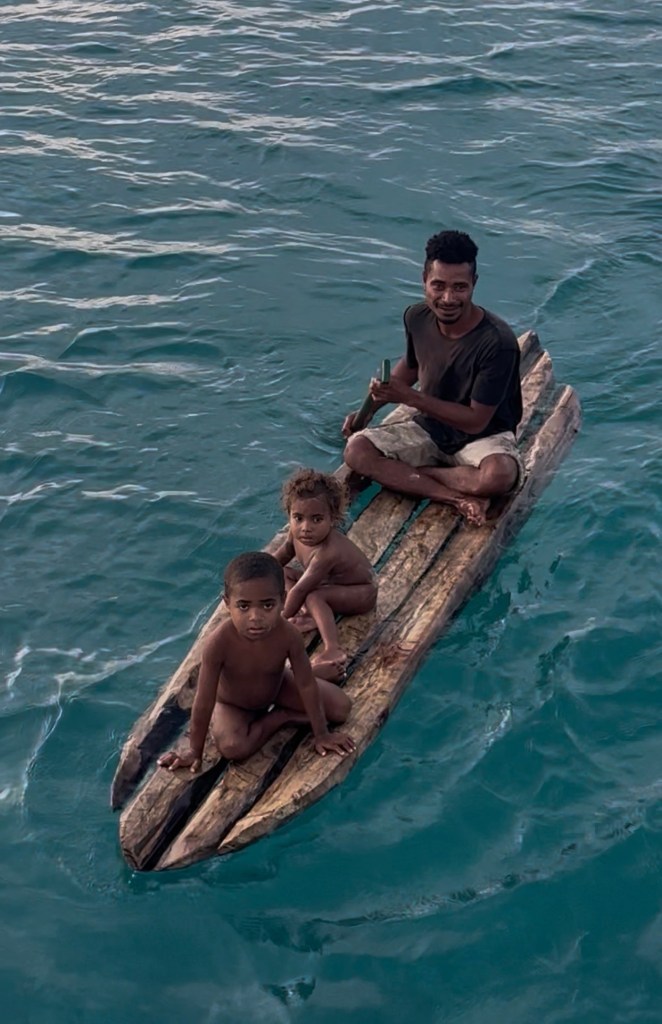
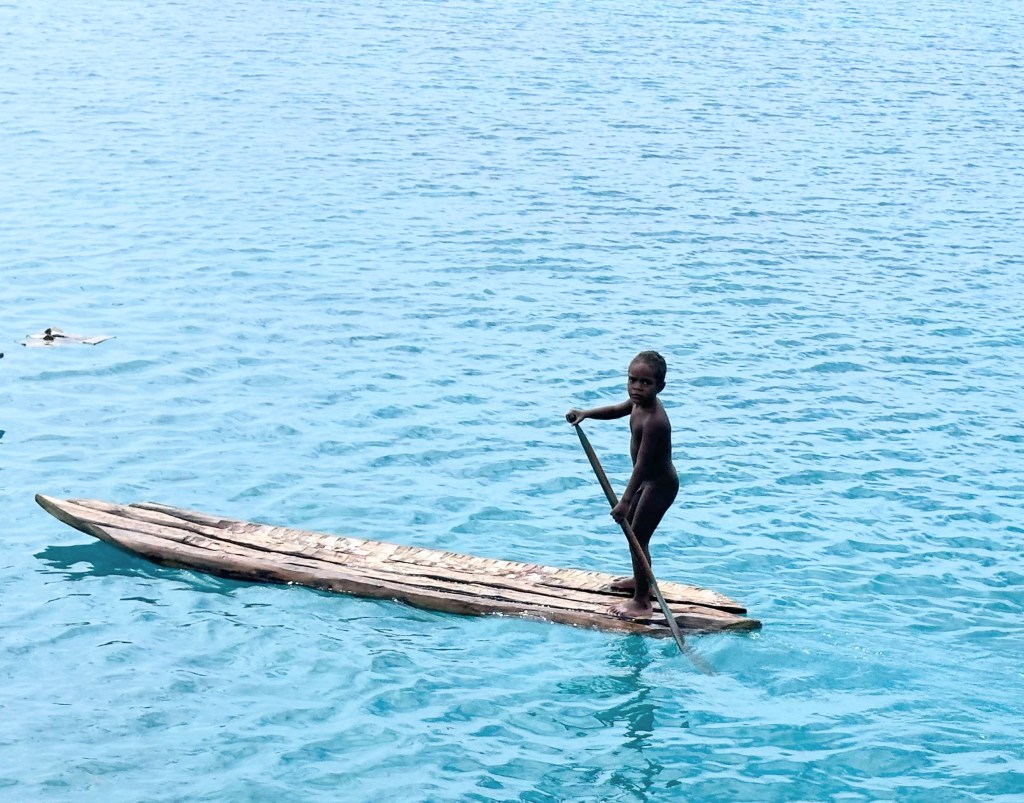
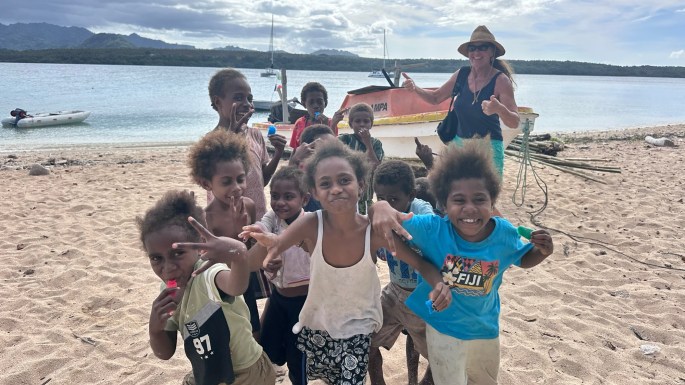
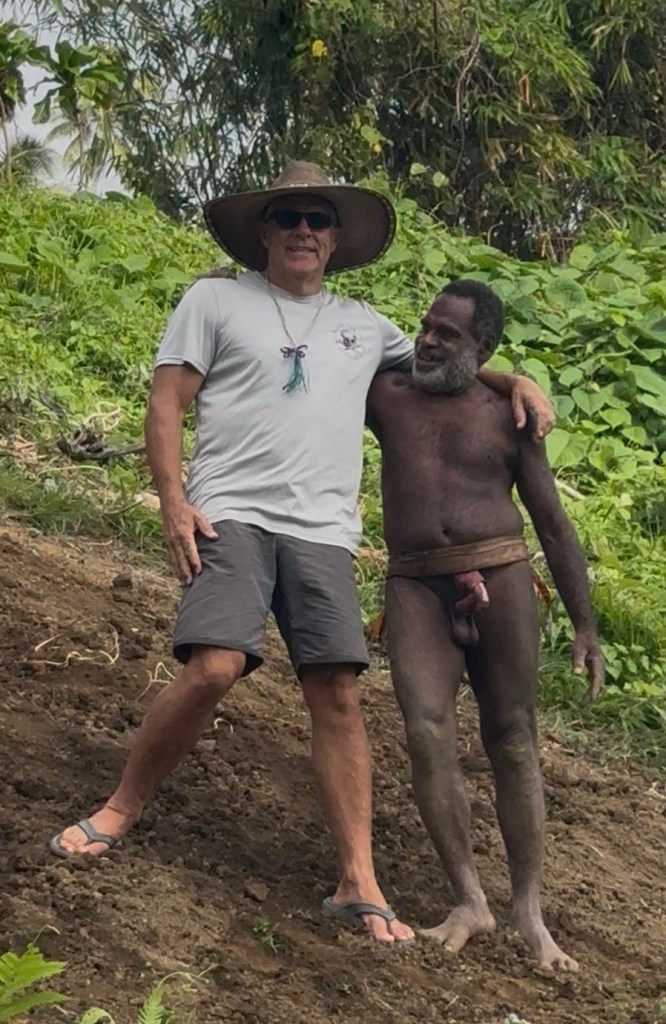
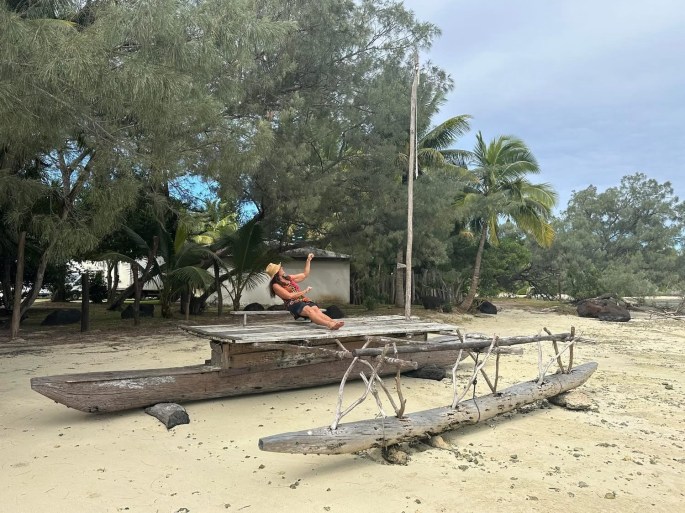
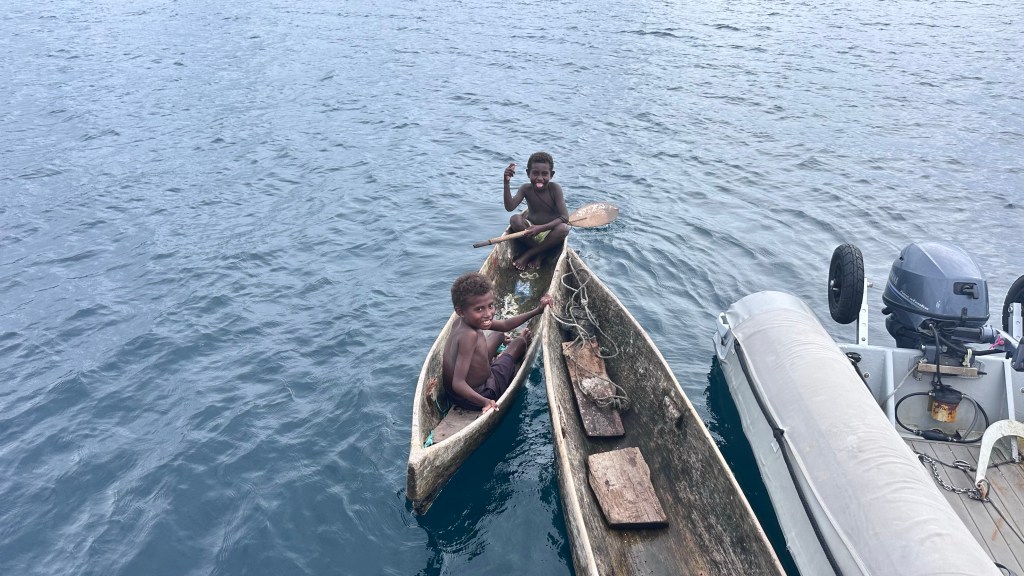
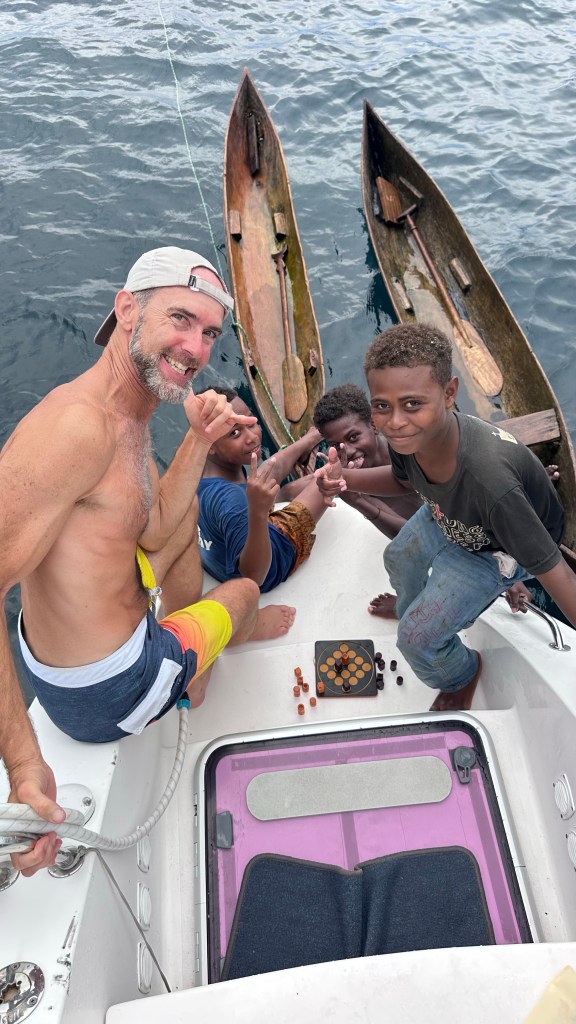
The Reef group of Islands was also a shocker. Dozens of canoe children, called pikinini’s, rowed up to KALEA all day, everyday during our week stay in this Southern province. Kathy shared some brownies one day and ice cubes another, played loud Michael Jackson while we all swam off the back steps, the smiles, giggles and chatting. This Island sees very few visitors and us being “white skins” we are a bit of a spectacle. Not to mention that the adults just paddle out to the boat and stare, like it’s a spaceship. This island is one of the few Polynesian islands vs Melanesian. A very poor island with no data sources at all. No phones, cars, stores, air strip, power….nothing, but, wow do they have hearts of gold. Always wanting to give fruit, veggies and share in a little laughter or a simple story. Not very much English is spoken here. We quickly learned the value of trade. For over a month, we traded with the locals, usually at the back of our boat, sometimes in their home. They loved receiving; clothes, pantry items, notebooks, pencils, soccer balls, fishing supplies, cookery, and even a pack of oreo cookies. They would rather have these items than money. They would give us fruit, root veggies, coconut, and seashells. At the end of the week, we all celebrated good new friendships over a potluck meal, complete with singing, speeches, and gifts! Check out our video:

https://youtube.com/watch?v=-9JOJKCwjIw&si=89TaN5b-N4l5MrJm
Betel Nut, really a Areca nut, causes the red teeth in most adults in these parts of the world. The process of mixing the three ingredients in your mouth when mixed with your saliva turns your mouth red and teeth black. They say it is semi addictive (with a happy high) and the majority of the adults (some children as young as 12) appear to do it. The Solomon Islands and Papa New Guinea are know for it. Ingredients: Betel nut, Green Bean looking thing 🤷, and Slaked lime (calcium hydroxide powder), made from burnt coral or shells.
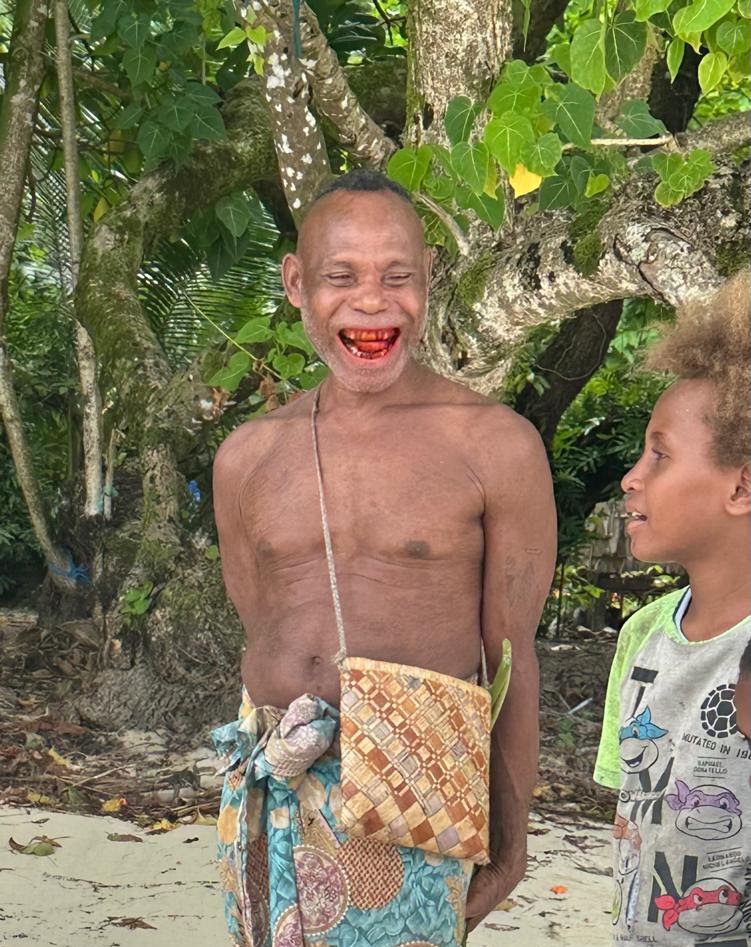
James and Amanda explain Betal nut

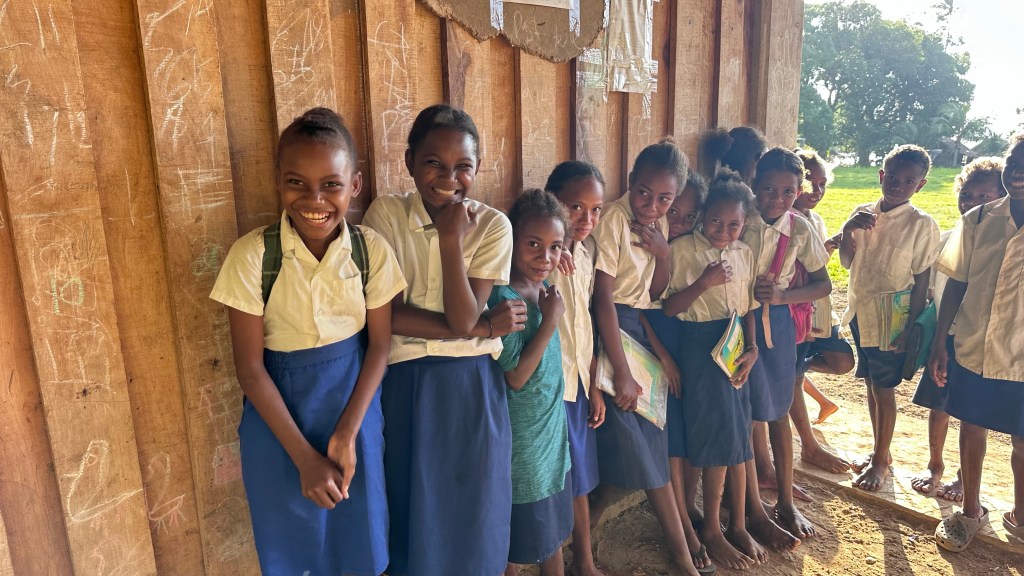
🌎 While we were in the Florida Islands, Kathy visited Leitongo School. When the chief had learned she was a retired teacher, he invited her to be a volunteer teacher for the day. This was a thrill, and she gave it a go. “I stepped up to an old dusty chalkboard with stumpy little bits of chalk to teach 4 different subject areas for 4 different classrooms. This was an English only school, but the teachers mainly use Pidgin English for instruction. The children were such cuties, like sponges, glued to my every word and participating fully in my ‘off the cuff’ silly but engaging activities.” 😀
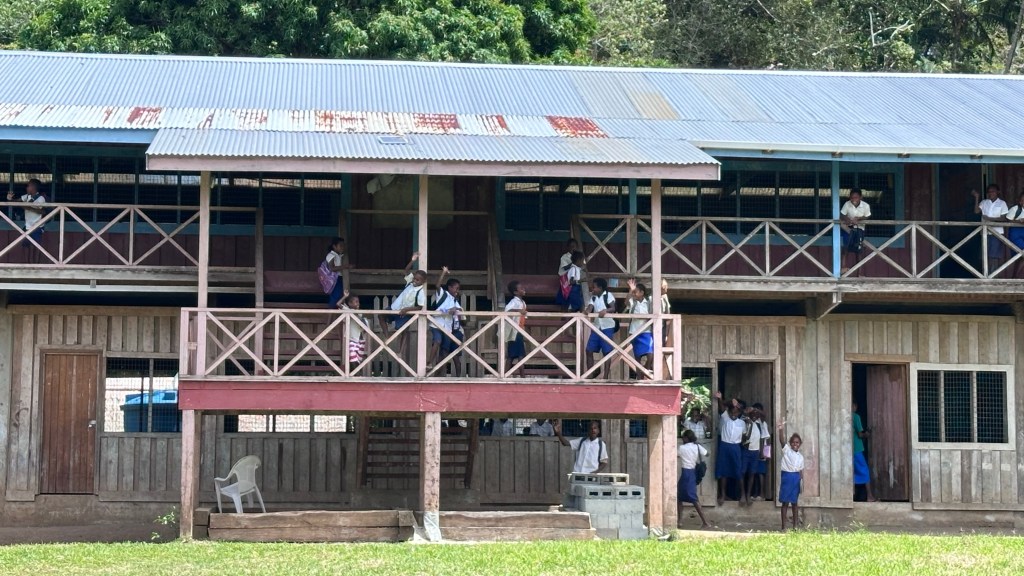
She bonded with the wonderful school teachers and had so much to learn and share from each other. Almost felt like old times again, back at SLOHS in California. Later that day, the school administrator explained that although the school was grateful to receive a much needed WASH facility (flush toilets) last December, unfortunately they had not been able to use them due to a defect in the construction! OH NO!😬. Sadly, they locked the doors to the restrooms and all 125 school children (and the rest of the local population) have returned to defecating among the mangroves along the ocean. 😳
Well, since my bother Andrew was visiting from California, and since he is a licensed sanitation Geologist, he promptly emailed the Solomon Sanitation Department and the US Embassy here. UNICEF will now be reviewing, monitoring, and making maintenance arrangements with the school, contractor and relevant authorities AND will fix this issue and help prevent similar issues in other facilities, world wide! 😊 Stay tuned!

The Solomon specialists appreciated the technical suggestions my brother raised and planned to visit the island immediately. It was such a short and simple effort we made within our short stay, but YAY! We love to make a difference in the world, any way that pops up. 🌎
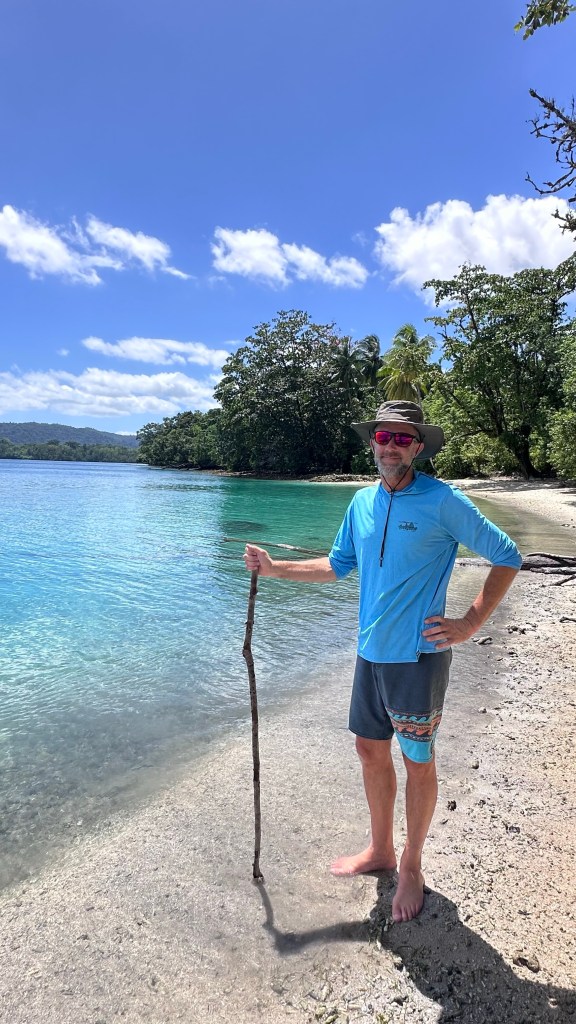
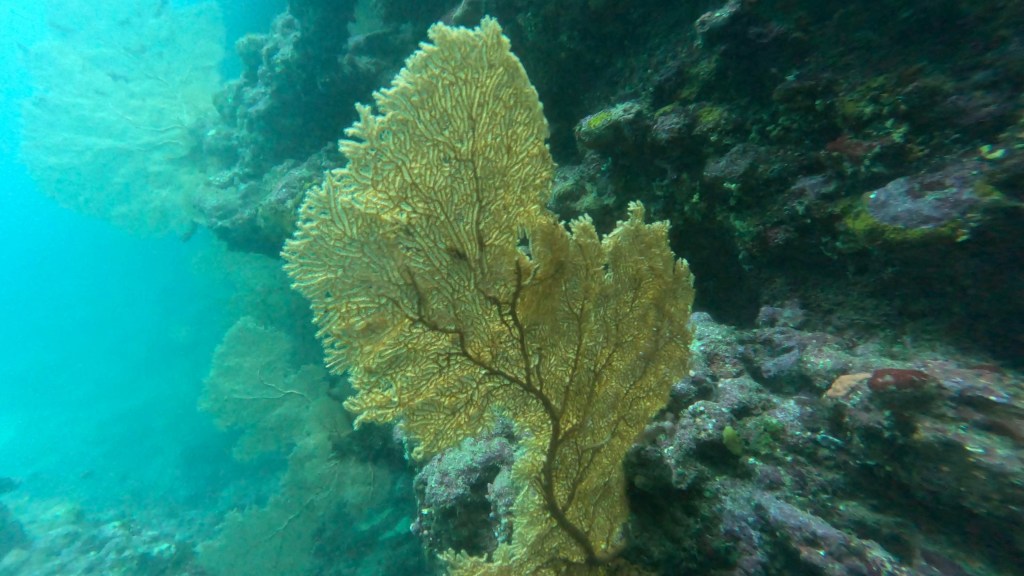
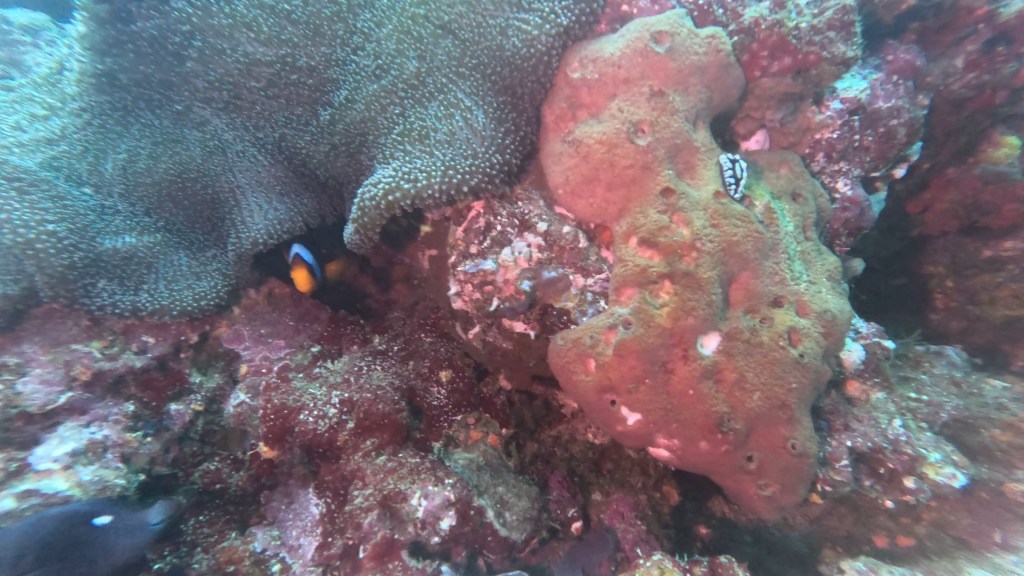
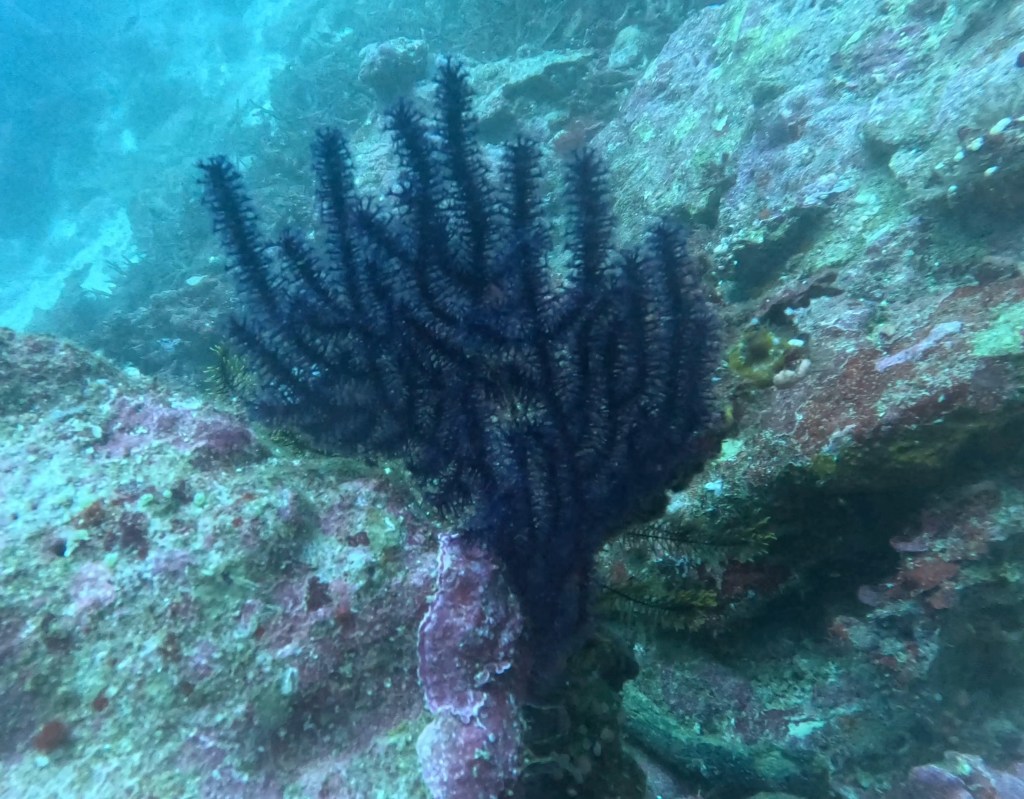
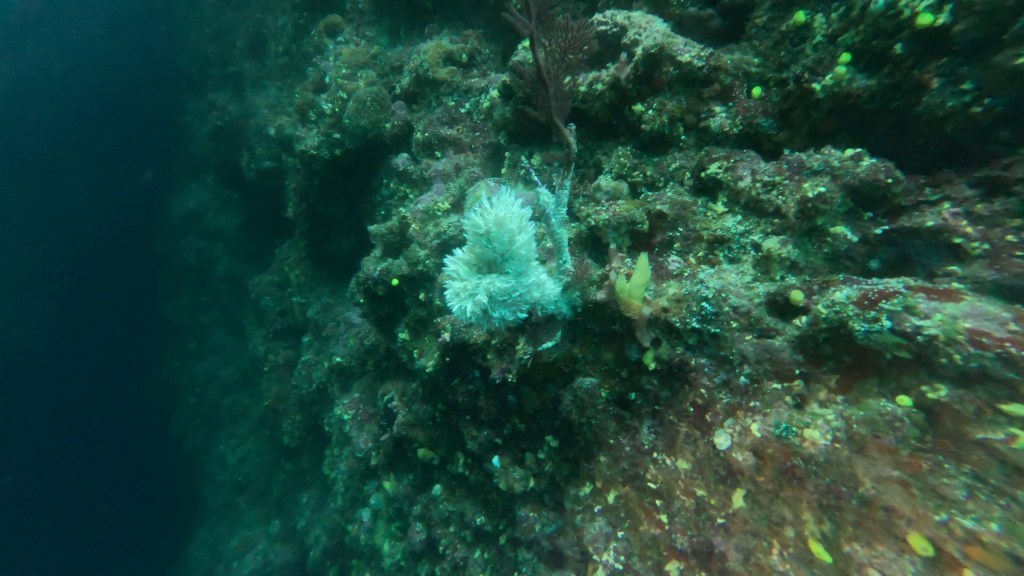
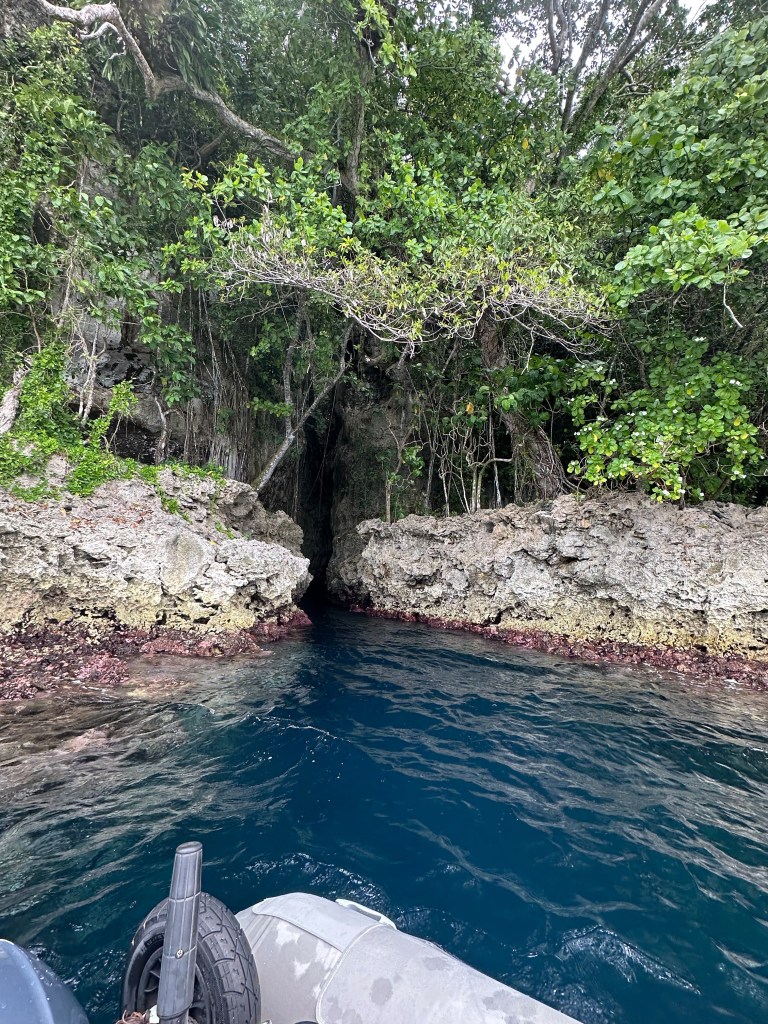
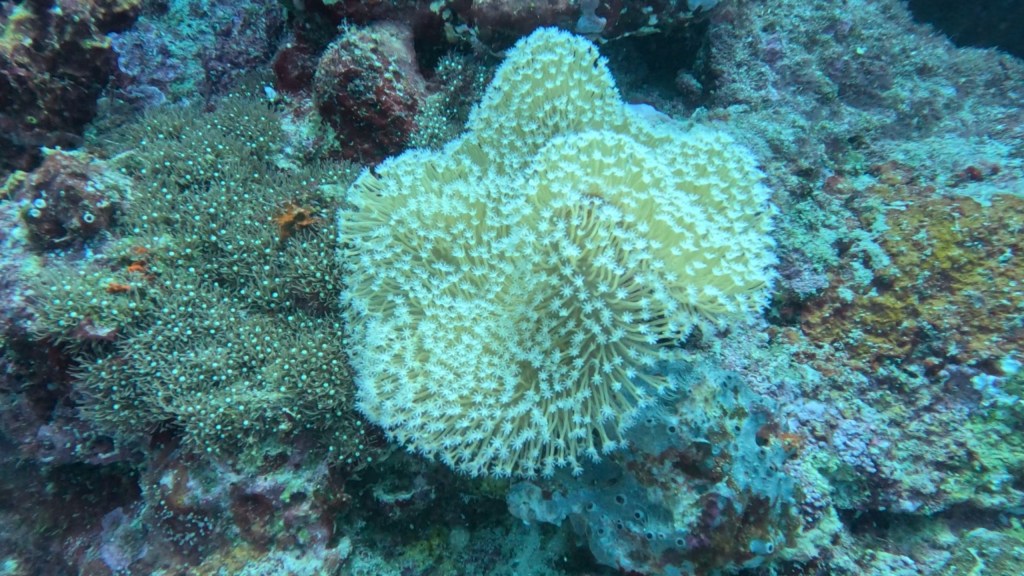
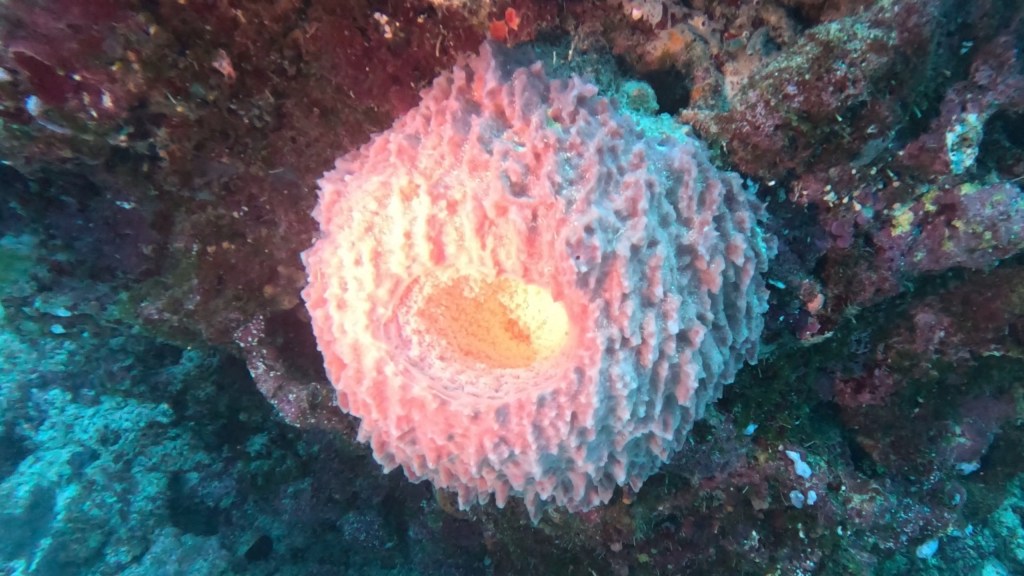
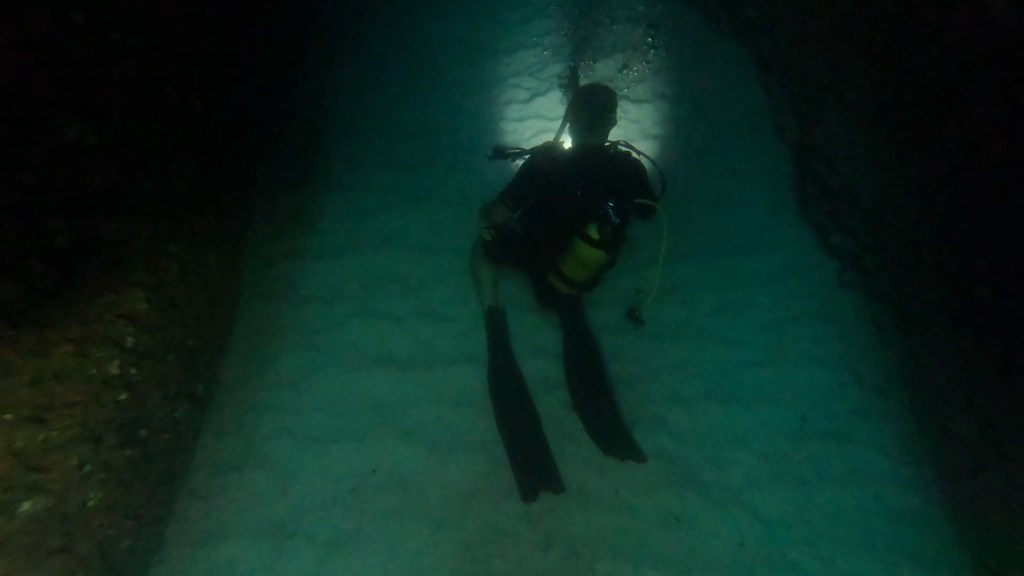
We were able to avoid the crocodiles and Scuba Diving twice in the Solomon Islands. Our first dive was Laru Cut. This is a slice in the massive limestone wall, going 10 feet wide, 300 feet long and about 60 feet ahead into the jungle and 60 deep into the clear ocean waters. Quite an experience with the light filtering down in the crevice and onto the sandy floor. There were not many fish or coral, but so cool for us to to be swimming in signal file to the end and back. Once done in the crevice, we continued to the outer wall, with nutrient rich waters rushing by none stop. This wall was so thick with corals, fans, sponges, fish and nudibranch-really loved it!
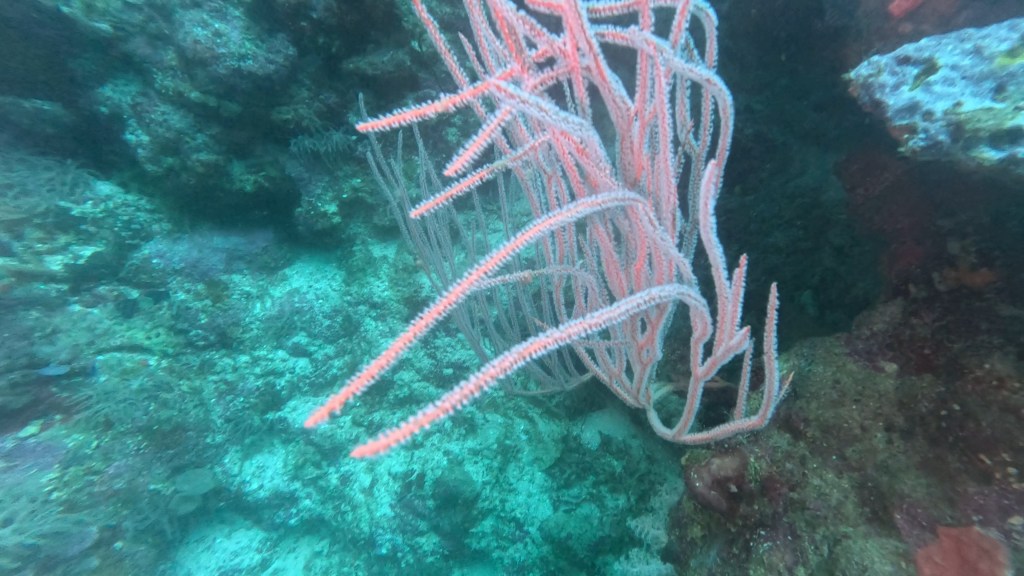
Did you catch that? Yes there are crocodiles here, another regular and very sad news worthy issue. we anchored one quick night and had a resident salty circling our boat!

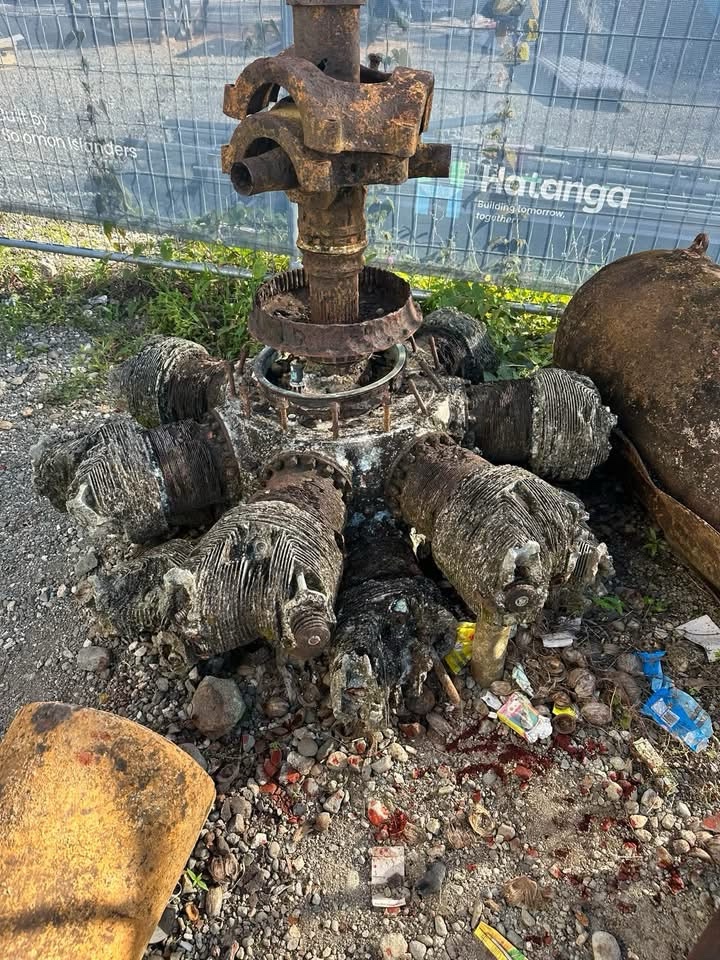
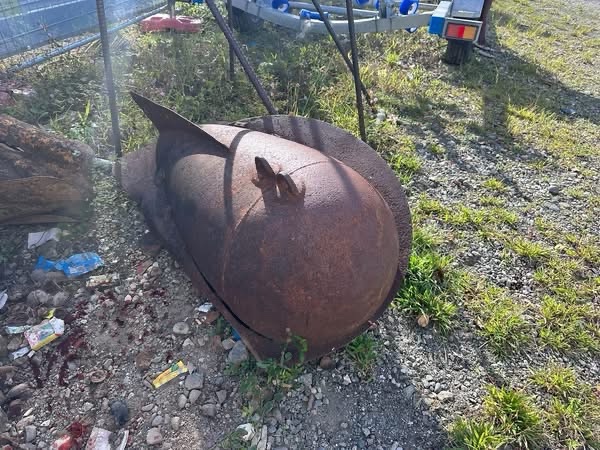
We later dropped off Kathy’s Brother at the tiny strip of rough asphalt known as Seghe Airport, on the island of New Georgia in the Solomon Islands. Seghe airport was hastily built in 1943 as a forward airbase during WWII. (Think Ba Ba Blacksheep) When we parked the dinghy at the dock the airport was under construction with a new terminal. For some reason they had pulled out of the ocean an old engine and what one worker told us was a Mine sweeper drogue. We later identified the engine and it turned out to be a Pratt & Whitney R-1830 Twin Wasp Engine, 14 cylinders. It was most likely a Fighter/Bomber engine from a Wildcat F4F. Super cool. BUT, the Drogue turned out to be an arial depth bomb!!!!!! We are glad we didn’t touch it, very possibly live. 😳 Evidently there is three aircraft still in the water at the end of the runway one of which is confirmed to still have 325-pound depth bombs attached to them. The Solomon news reports deaths by bomb nearly every year! Incredibly sad. We made a note in the sailing app: NoForeignLand NOT TO ANCHOR anywhere near the airport. 😳
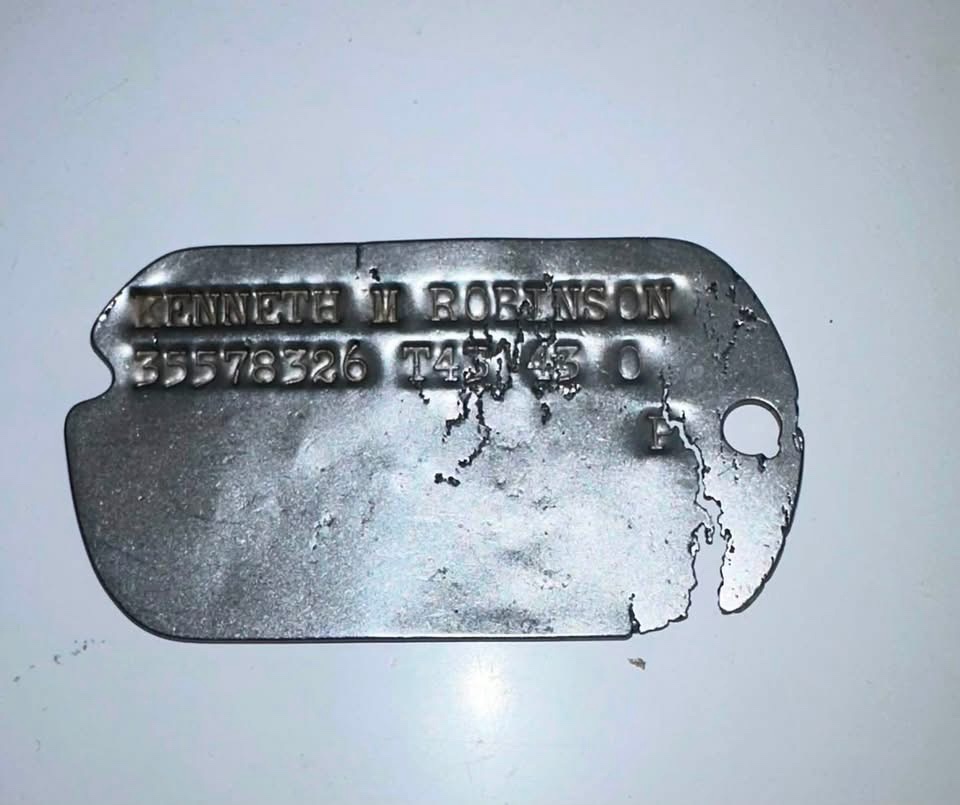
More details on WW2: If you didn’t know, we were at Guadalcanal for a few days. Thousands of Americans died here stopping the Japanese movement south in WWII. A local brought us a dog tag that was found near his village. He is looking to sell it but basically he wants a “reward”. He is asking $1000 USD. 😵‍💫🥴 He was in WWII and in the Solomon Islands in 1942. After a bunch of research, Scott learned that this soldier had an injury and was sent back to the states in 1943, and apparently has left his dog tags here.

Interesting fact, we were on an island a week ago that a soldier washed up dead in 1942. The local Chief at the time, not wanting to gain any attention to his island, instructed the village to bury him up on the hill. Just recently the village revealed the location of the grave site and the Australian military came and exhumed the remains JUST TWO WEEKS ago and took him back to Australia to try and identify the MIA soldier, most likely a US or Australian serviceman.
Amazing really and makes us proud that our countries are still working to reunite our fighting men with their families and country homeland.
Goodbye Vanuatu, Hello Solomon Islands

Sailing across the Pacific Ocean over the last few years, we now make Landfall in country number 11: Solomon Islands. It was a beautiful, steady sail north from the lovely Vanuatu provinces — 220 miles on a beam reach, 1 reef in the main, with a 3-meter swell on our starboard quarter. We anchored at midday to drumming and a warm welcome from the local village.

After an easy clearing in at Lata, Solomon’s, we sailed another 35 miles to the remote Reef Islands. Kathy shared brownies with the kids who paddled out to greet us. This island sees very few visitors — none in the last five years, we were told — so our boat Kalea got a lot of curious attention.

Video from our YouTube Channel @kaleasailingadventure

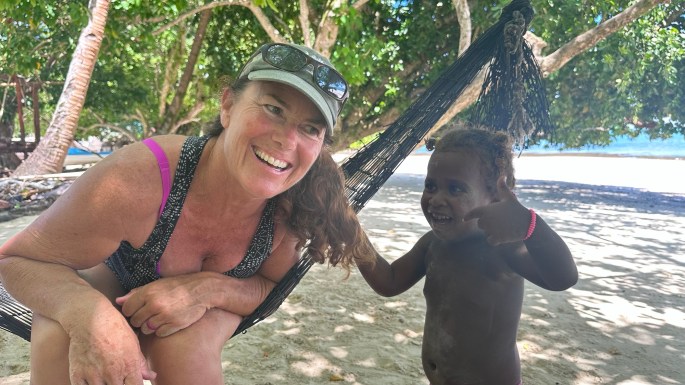
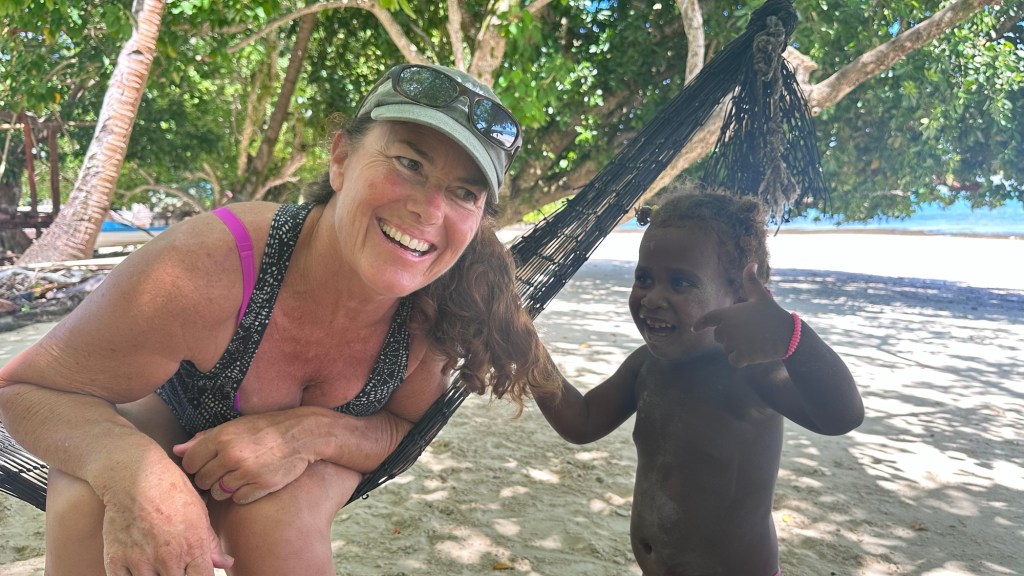
The Reef Islands are one of the few Polynesian outlier communities in a mostly Melanesian chain. Life here is very off-grid: no cell service, no cars, no mains power. Just incredibly welcoming and sweet. They speak Solomon Pijin, which is English-based but still tricky for us to follow, at this island anyway. We went ashore to meet the chief and brought small gifts — a soccer ball and some basic fishing gear. The little 2-year-old girl was fascinated by my hair and wanted to touch it. (Many more stories to come, as we will luckily stay in this country another 6 weeks.)

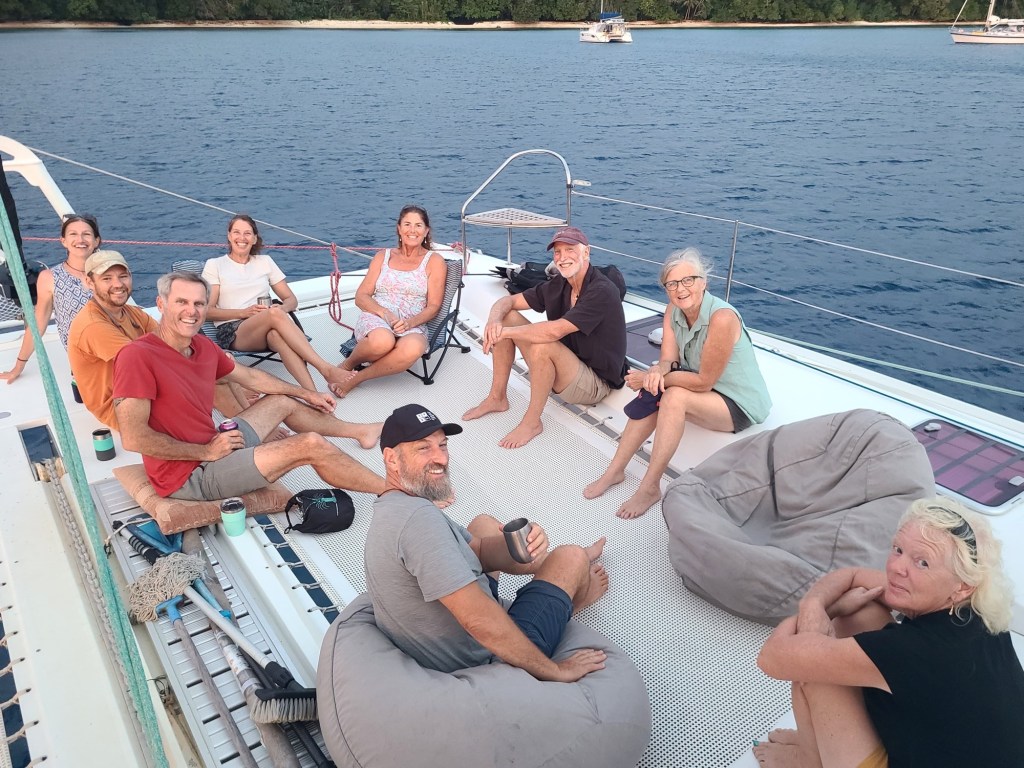
We caught up with new and past cruiser friends from French Polynesia, Fiji, and New Zealand. Some are doing a Pacific Ocean circumnavigation and the others will continue on through Indonesia with us next year or 2.
From the bottom clockwise: Hilde, Jason, Dennis, Chris,Jen, Candice, Kathy, Don, and Julie.

A quick thought back to our last days in Vanuatu celebrating Scott’s birthday. 🥳 So much love, laughter, and unforgettable memories. Our friends really spoiled him.

After the birthday, one of our last and favorite stops was the small island of Gaua. You haven’t heard ‘nature music’ until you hear the Water Music women. The water is more than just the sea. It’s calendar, it’s food, it’s story. And the women have learned to play it. What struck me most: they told me this is not “a show for tourists.” It’s village life. A daily practice now kept by only a few villages. Standing in a line in the sea, they use cupped hands to trap air and slap the surface — creating deep bass notes, sharp clicks, and rushing splashes. Six or seven women — sisters, cousins, mothers, in-laws — in perfect sync, and the water becomes an orchestra. The woman in front leads the story: the dolphin jumping or the daily work of the village. All you need is black sand, the sea, and village kids watching from shore to learn. No drums. No strings. Just water — until it sings. Beautiful and loud! 🎶

Now for a well known fact about the culture in Solomon’s, the chewing of Betel Nut. We had a nice chat with James and Amanda in the Reef Islands. They walked us through how they chew areca nut, or betel nut. You mix three things in your mouth and your saliva turns red — over time it stains teeth. They say it’s mildly addictive, gives a small buzz, and a lot of adults chew it. You see it across Solomon Islands and Papua New Guinea too.

Ingredients they showed us:

  1. Betel/areca nut. 2. Mustard stick / green bean-like leaf (they call it daka) 3. Slaked lime — calcium hydroxide powder made from burnt coral or shells.

Collecting new shells, Scott reflects:
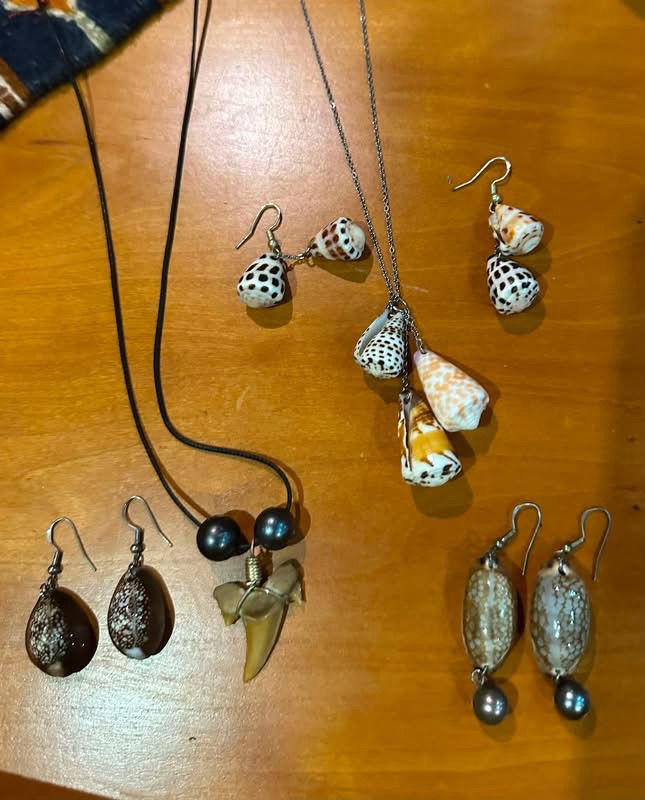
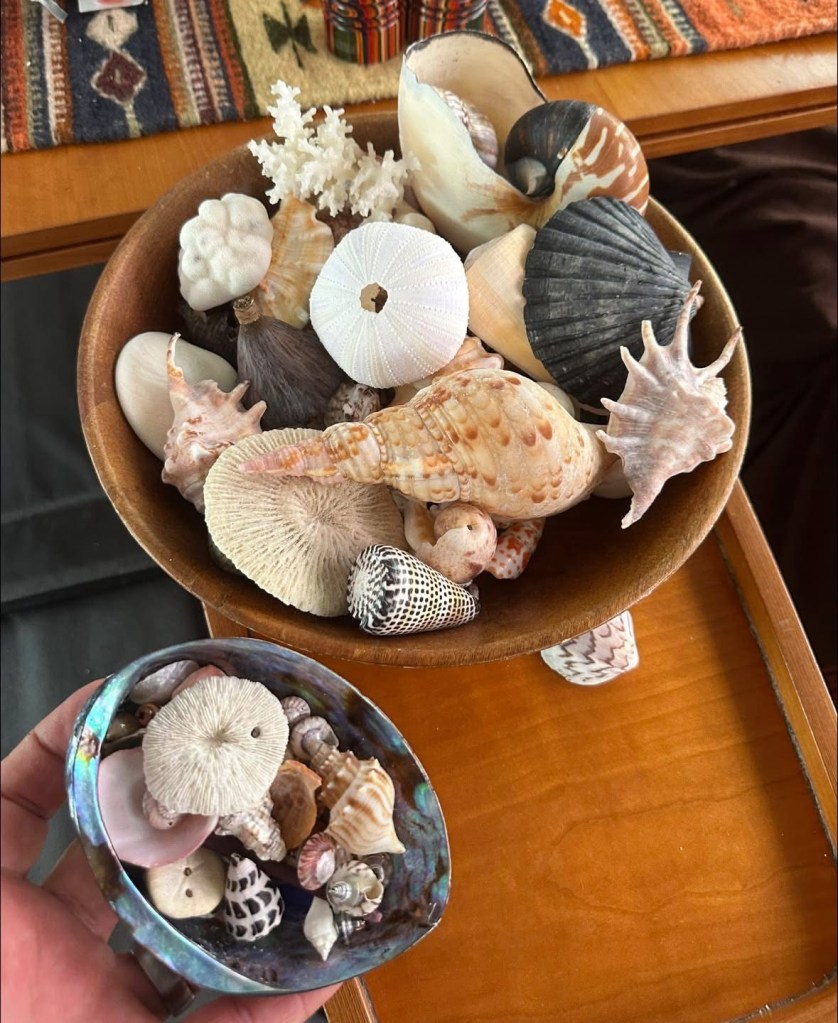
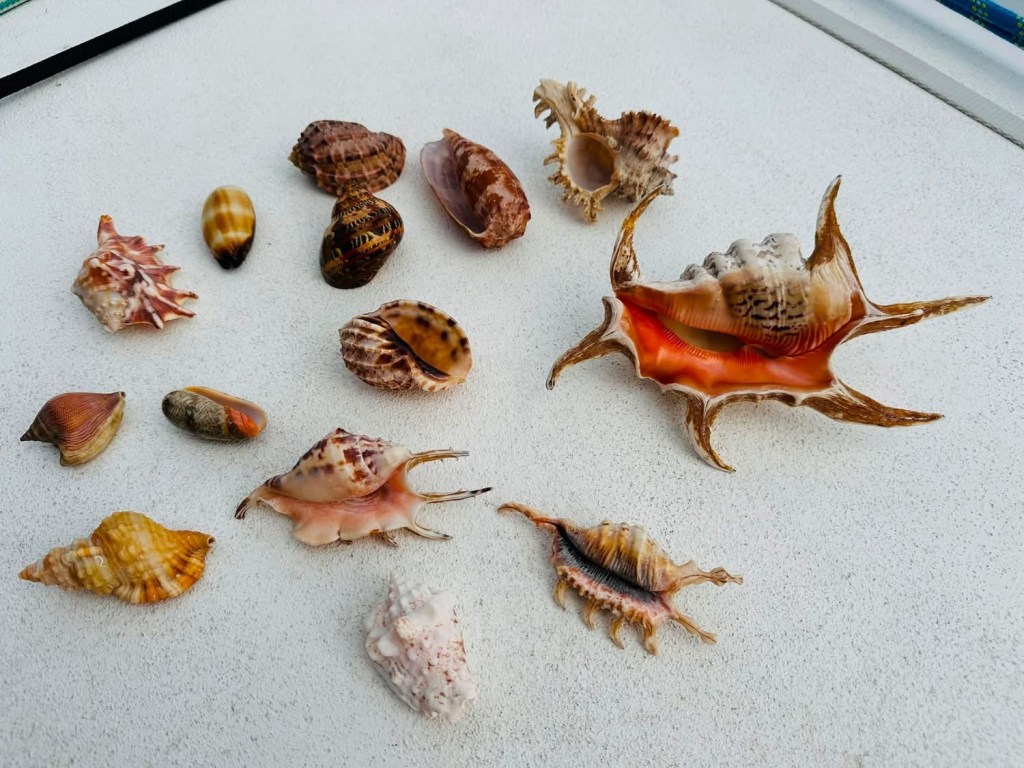
“All my young life, my mom would walk the beach with my brother and me, collecting shells. In South Carolina, our house was full of them — in drawers, in boxes in the garage, and in those hurricane globe lamps everyone in the family got at some point. I remember so many days walking the shoreline, hunting for those little treasures. Even now, 50 years later, I still walk the beach looking for that unique or perfect shell. I turn them into jewelry and give them to local ladies or family at Christmas. Today, those walks are still time I get to spend with my mom — miles and miles of beach with her at my side, discussing each shell we find. Linda Erwin, you are part of why I love the sea… and all her treasures. I still walk with you.” ~Scott

The Blue Holes and the Jungles of Vanuatu

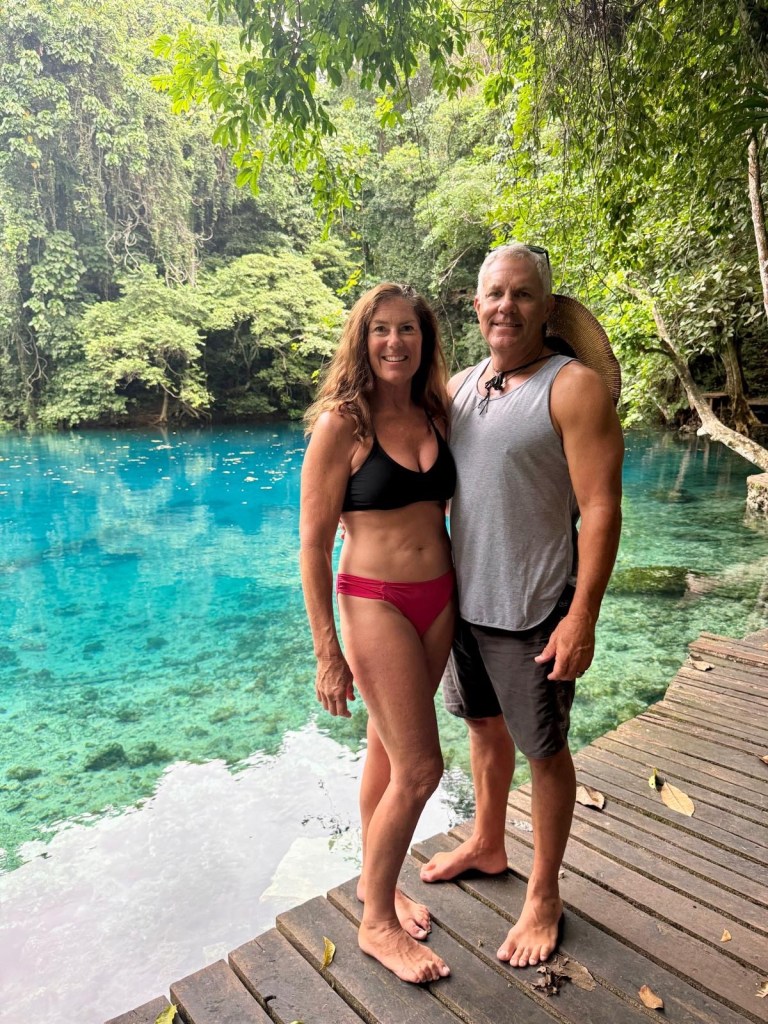
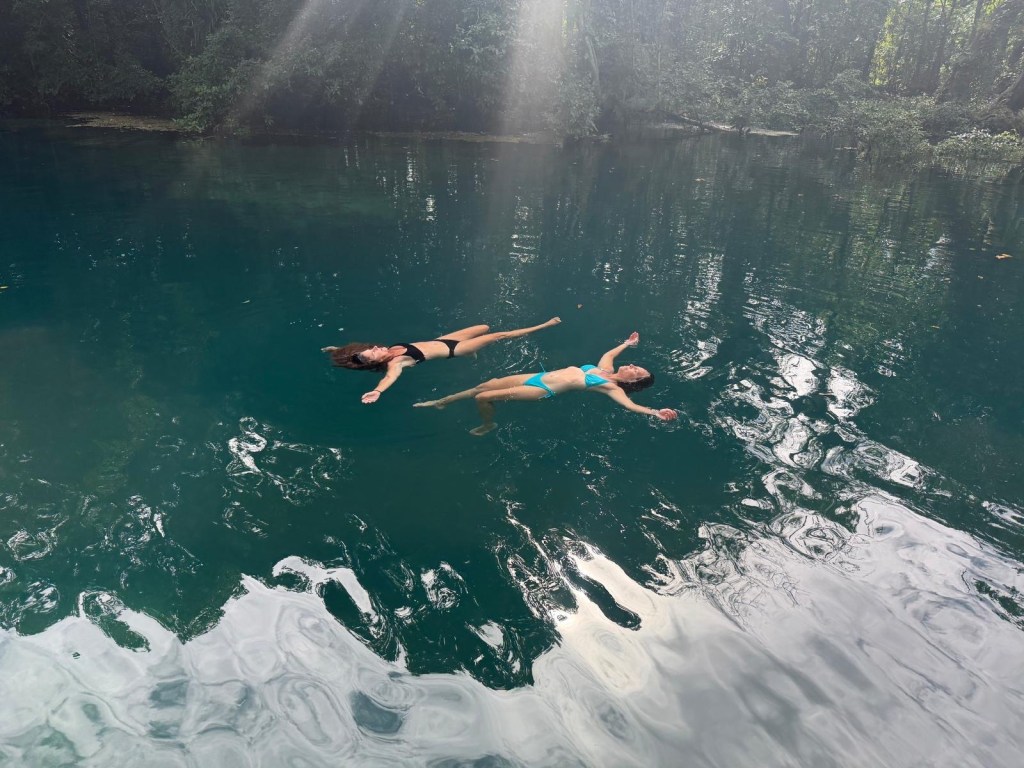
Dotted around Vanuatu are these incredible natural swimming pools called blue holes. They form by rainwater trickling through the volcanic rock and down into the limestone, making the water unbelievably clear and dazzling turquoise. We found most of these spots in the north of Santo Island. One can find them hidden in the lush rainforest, some accessible by car and others requiring a paddle or dingy ride up a small winding jungle river.
We were lucky to find 5 of these crystal-clear, mesmerising blue water spots. The light interacts with the limestone and water. The water is so clear and deep that it absorbs all colours except blue. We were lucky to find these holes about a mile up a jungle river. Luckily there were no mosquitoes anywhere to be seen! They say it’s too dry?? I say it’s too windy.

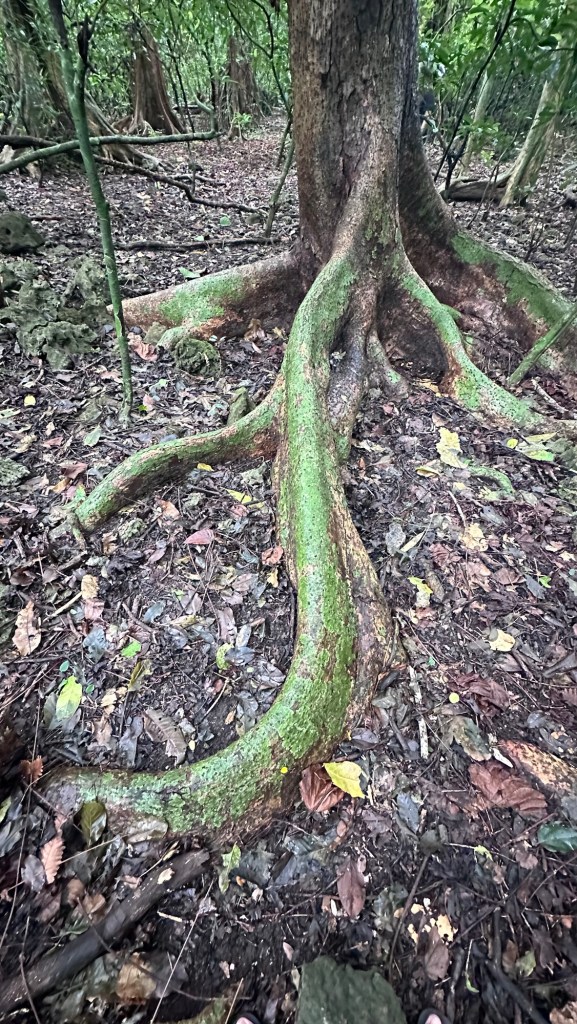
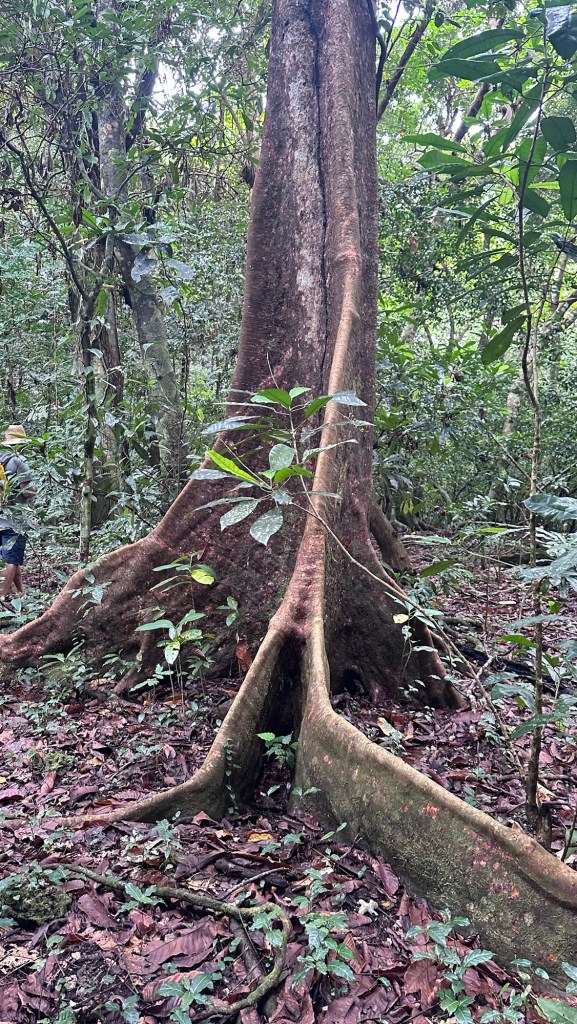
The jungles of Vanuatu are dense and such fun to safely explore and hike through. We ventured off trail, gps in hand, and searched for a hidden lake. Little did we know we would find so much more. The TREES! And vines as thick at my arm so twisted and gnarled around them. One looked like a double braid rope.

Hidden lake near Port Olry

It was fun for me to write a share about Vanuatu and our 5 year sailing journey (so far) on Noonsite, an online sailing site. If you want more details about the ups and downs of cruising lifestyle, some pacific Islands we enjoyed, which boats we picked and why…take a look. If the QR code doesn’t work, click below.

https://www.noonsite.com/report/portrait-of-a-cruiser-scott-and-kathy-erwin/

If you are interested in sailing, scuba or Kathy’s Yoga videos check out:

https://youtu.be/PgIVx6CboPs?si=lqTdOz3Y4G7X4NTL

Landiving in Vanuatu, and Scuba diving the Coolidge.

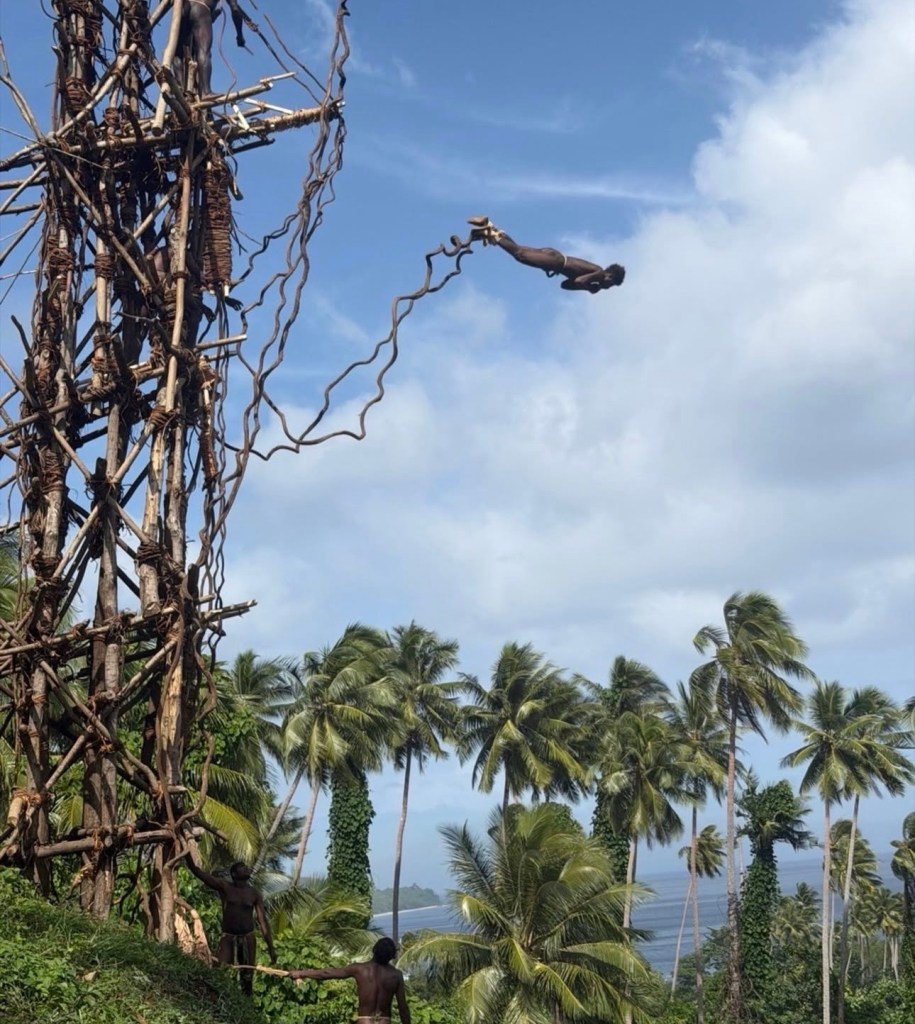
Here are some fun and fascinating facts about the ancient land diving event: This ritual is believed to be the precursor to modern bungee jumping. The wooden tower can reach up to 98 feet high. Specific vines are used instead of ropes, carefully selected for strength and flexibility. Only the young men participate in the jumps, which are considered a rite of passage in some communities. We learned that the purpose of the dive is to ensure a good yam harvest and honor ancestral traditions. The event draws visitors from around the world, eager to witness this daring cultural spectacle.
• Safety and timing are critical—jumpers calculate vine length to land safely on the ground.
More info from nfl cruising guide: The population of around 330,000 speaks more than 100 distinct languages, making Vanuatu one of the most linguistically diverse nations on earth. Bislama, English, and French are the official languages, a legacy of the joint British and French administration that governed the islands until independence in 1980. Kastom, the system of traditional law and cultural practice, remains central to daily life across much of the chain.

Maritime history

The first settlers reached Vanuatu around 3,500 years ago, the descendants of the Lapita people who spread across the western Pacific in longboats carrying pigs, chickens, yams, and taro. They established small autonomous clans across the islands, developing over millennia into the extraordinary linguistic and cultural diversity that survives today. Ancestral spirits, magic, and the grade-taking ceremonies through which men accumulated social rank remained central to life across the chain, and kastom practice continues to shape daily existence on many islands.

European contact began with the Portuguese navigator Pedro Fernandes de Queirós, who landed at Espiritu Santo in 1606 and named it Austrialia del Espíritu Santo. Louis-Antoine de Bougainville followed in 1768 and James Cook charted the archipelago in 1774, giving it the name New Hebrides. The nineteenth century brought missionaries, traders, and labour recruiters, and the practice of blackbirding, the coercive recruitment of island men for Queensland sugar plantations and Fijian estates, affected the southern and central islands severely from the 1860s through the 1900s.

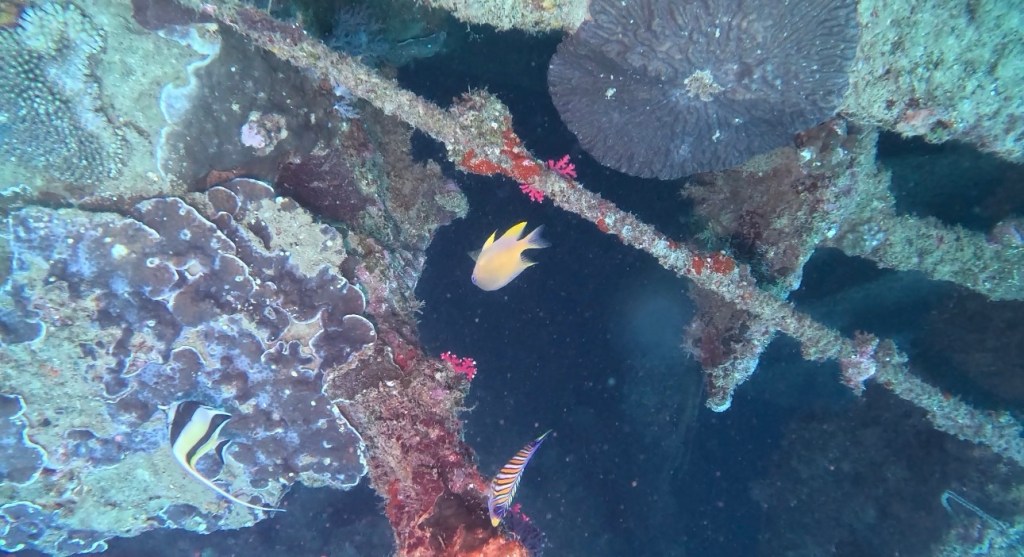
From 1906 the islands were governed jointly by Britain and France under an arrangement that ran two entirely separate administrations, courts, and police forces side by side over the same territory. Residents could choose which country’s laws applied to them. During the Second World War the islands became a major Allied base, and Luganville on Santo developed into one of the largest US military installations in the Pacific. When American forces departed, they dumped vast quantities of surplus equipment into the sea at what became known as Million Dollar Point rather than accept the nominal prices offered by the colonial administration. We did take one organized dive to explore the vast USS Calvin Coolidge which sank after hitting a mine placed to protect the base. (Nobody updated the captain where the mines were). It was a 5000 man troop ship. HUGE!!

Interesting fact, we also snorkeled Million Dollar Point. This was a place the Americans pushed thousands of vehicles, bulldozers, combat weapons (and everything else under the sun) into the ocean……taking 7 days…..
They first tried to sell it all to the French for pennies on the dollar but the French (owners of the island) refused, as they were thinking they were gunna get it for free anyways. Instead of leaving it for free, the Americans pushed it into the ocean just to spite the French. Walking the beach we found all kinds of artifacts including old bottles, plates, airplane engines and who knows what else. 🤷

Sailing New Caledonia

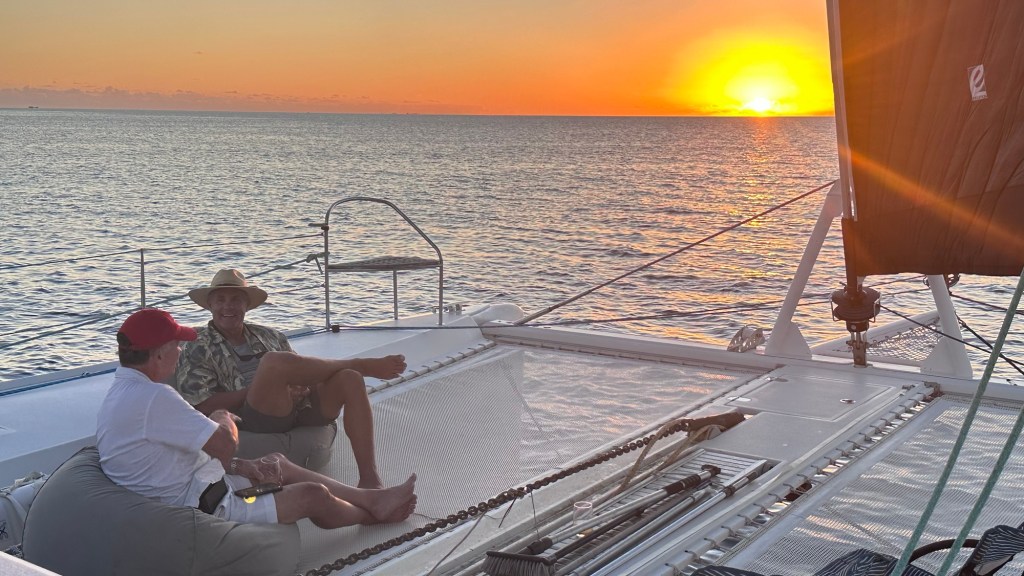
A relaxing week down at the very south remote islands in New Caledonia. The sand is so white here, but not a seashell to be found. The rain evidently followed us up here from New Zealand, but we won’t complain. Saying goodbye to New Caledonia, and our new French friends that we made here. We enjoy learning about the country from the locals. Barbara and Kim treated us at their delicious restaurant “Hanahana” and later we took them out for a spectacular sunset sail. Much discussion on local Politics, culture and family similarities.
The capital city here is Noumea, and is bustling, a bit dirty and very French. We found some fun spots, the Catholic Church, some ruins from 1881 and even bought a new dingy for a friend in need. (Not saying any names here, btw) 🤣
My favorite aspect of Noumea is the fact that it’s free for both check in/out and the 3 month visa. The wines, cheeses and diesel was not cheap, however. But feeling very grateful! 🥰 We are off to Vanuatu tomorrow first light, aiming for Port Vila where 4-5 boat friends are waiting for us. Moving right along! We are here for another week, then will head north to country #2 of 5 this season; Vanuatu.

Sailing to a new country? Customs, Immigration, Biosecurity…

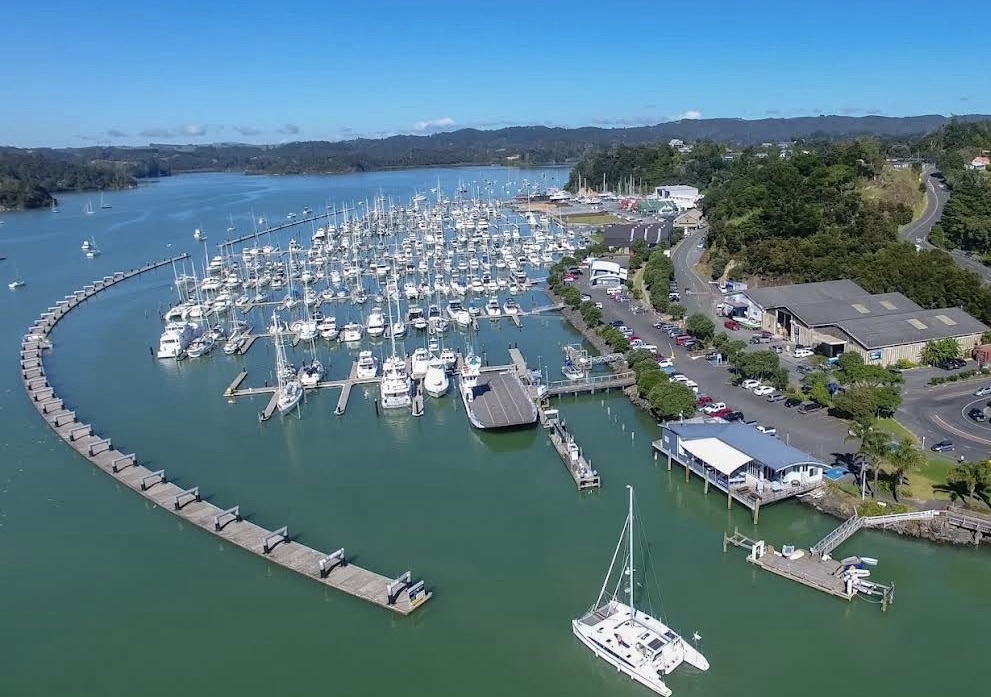
Bay of Islands Marina, NZ

New Zealand Check out time! 😅
We often get the question from family back home; “What is the Customs process for a sailboat exiting or entering a country, and what about Immigration?” Folks are shocked at the lengthy procedures, not just for us crew but for the boat as well. The Port Officials and Border patrol are always watching all boats coming and going. They use online programs like Marine Traffic, since boats have an AIS (automatic identification system). Their exact location is transmitted through the vhf radio. Port authorities, and coast guards worldwide rely on AIS for traffic control, and security. In a few days, we check out of New Zealand. They will review our visas, our paperwork, our boat documents and stamp all crews passports. They will monitor our boat closely, after our appointment, we promptly exit their waters without stopping.

We sent in the New Caledonia Customs paperwork so that when we get close, we will hoist our yellow flag, and arrive at their check in area. This yellow flag (Q flag) dated back to the 1300’s, aka “yellow jack” for yellow fever. It also means “my vessel is healthy and I request free pratique.” This indicates that we are entering their country and will head straight to the customs dock to resume health checks. This flag stays up until we are fully cleared in and free to come and go.

Once we are the Dock, our boat may get searched by biosecurity. They look for pets, plants, raw meats, drugs and produce. Any specified meats, fresh produce and alcohol over their limit is taken and our trash is double bagged and collected. The 21 or so official Customs papers that I had previously emailed in are reviewed. If all good, our passports are stamped, we lower the yellow flag, and hoist the local country flag above our US flag. Either that day or the next, we pay for clearing in and are granted our tourist visas, boat temporary import papers, and cruising permits. Then we can freely get off the boat and enjoy the country.
It’s a lot, right? Phew! 😅

Fiji

Once at the Port Dock, boats may get searched by biosecurity. They look for pets, plants, raw meats, drugs and produce. Any uneaten produce is taken and our trash is double bagged and collected. The 21 or so official Customs papers that I had previously emailed in are reviewed. If all good, our passports and boat intake forms are stamped we then lower the yellow flag, and hoist the local country flag above our US flag. Either that day or the next we pay for clearing in and are granted our tourist visas, temporary import papers, and cruising permits. Then we can freely get off the boat.

Researching Papa New Guinea

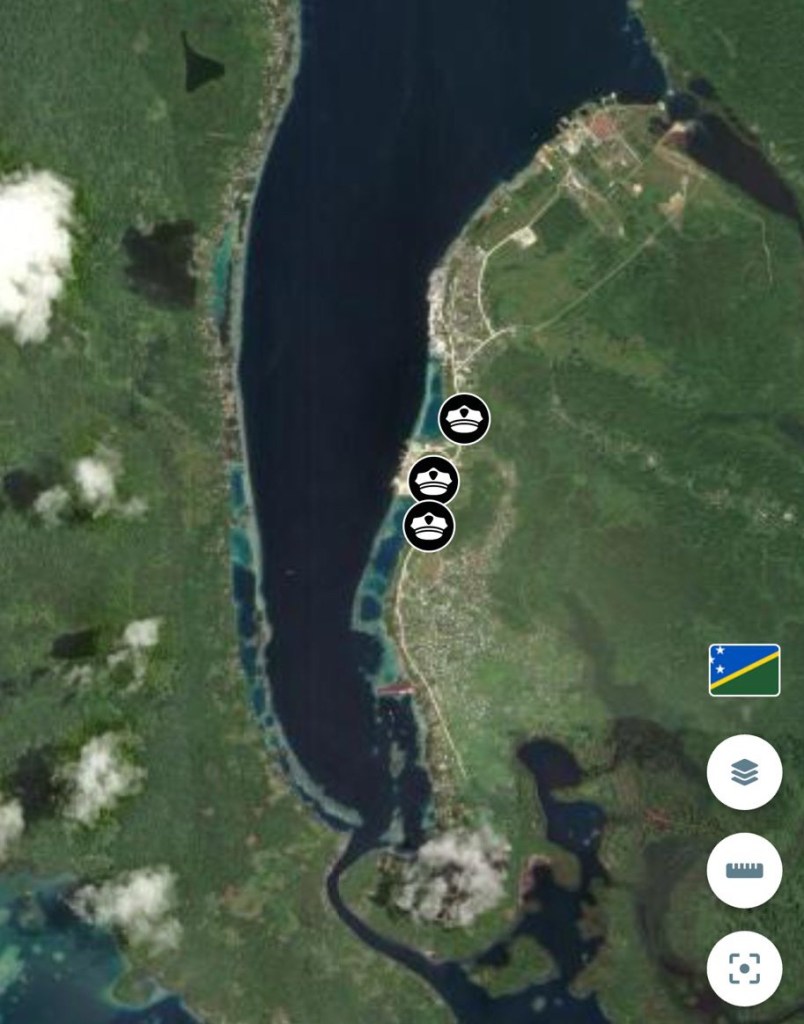
We spend a lot of time researching the location of the Ports of call for each country. There may be 4-5 Ports spread out on various small islands, all with varying advantages or disadvantages. For example, these remote places may only have offices open a few days a week. It pays to research. Sailors are grateful for the app called Noforeignland. With map filters we can easily find the Offices to head to. Sometimes these buildings are miles apart and might have no public transportation. These are stressful days. Remember, new country, new language, new money, new transportation and new procedures. We were lucky to have a welcoming party as we entered Fiji 2 years ago.

Vuda Marina, Fiji

Now we are saying goodbye to our 2 week stay in New Caledonia, and our new French friends that we made here. We enjoy learning about the country from the locals. Barbara and Kim treated us at their delicious restaurant “Hanahana” and later we took them out for a spectacular sunset sail. Much discussion on local Politics, culture and family similarities. The capital city here is Noumea, and is bustling, a bit dirty and very French. We found some fun spots, the Catholic Church, some ruins from 1881 and even bought a new dingy for a friend in need. (Not saying any names here, btw) 🤣
My favorite aspect of Noumea is the fact that it’s free for both check in/out and the 3 month visa. The wines, cheeses and diesel was not cheap, however. But feeling very grateful! 🥰

We are off to Vanuatu next, a 3 day sail, aiming for Port Vila where 4-5 boat friends are waiting for us. Moving right along!

That’s a Wrap! Good bye New Zealand & Hello New Caledonia.

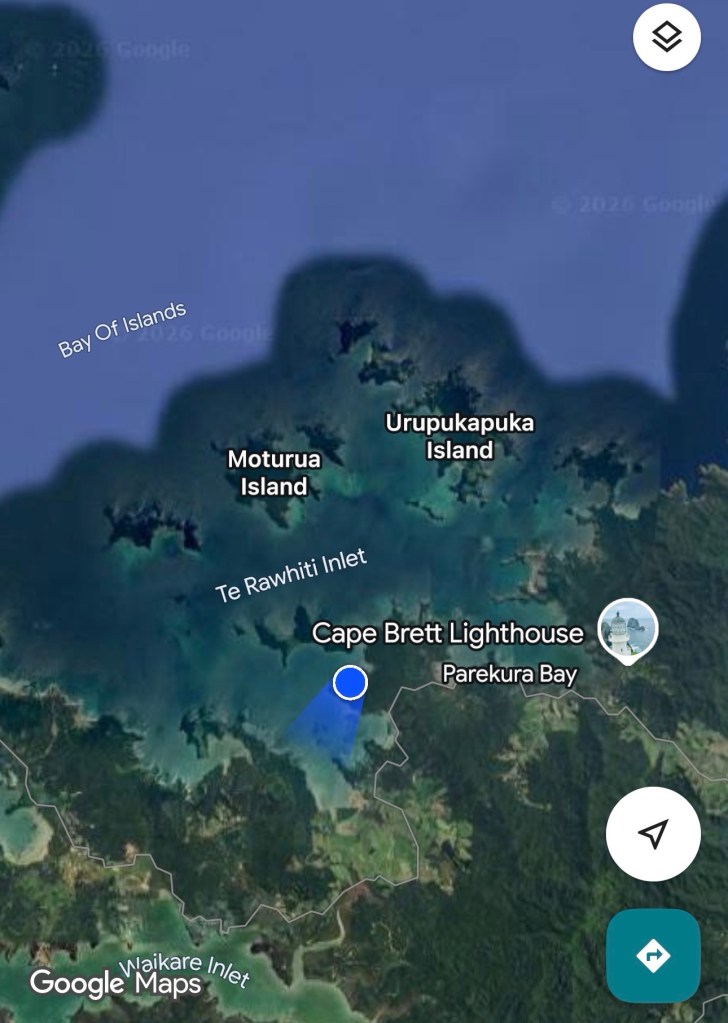
The rains and winds have totally died, and we are all settled in a calm and favorite tiny anchorage to enjoy the Bay of Islands and our last 2 weeks here in New Zealand. Hiking about on Moturua Island was good for a few of our last favorite spots. Luckily Kalea is comfy and spacious with all the necessities, and she doesn’t leak, it is Autumn here, by the way. ☔️

Whats next? We begin our prep for our clearing out of the country, and we will take the first weather window after May 1 (funny because that is when our marine insurance agent says it’s “Cyclone safe” 🤣🤣 Again, due to this typically rough passage north, we have 2 crew join us. A great highschool buddy of Scott’s; Tom Dwyer, will fly in. Also crewing is Mark Clough, excellent Kiwi sailor who joined our last trip north.

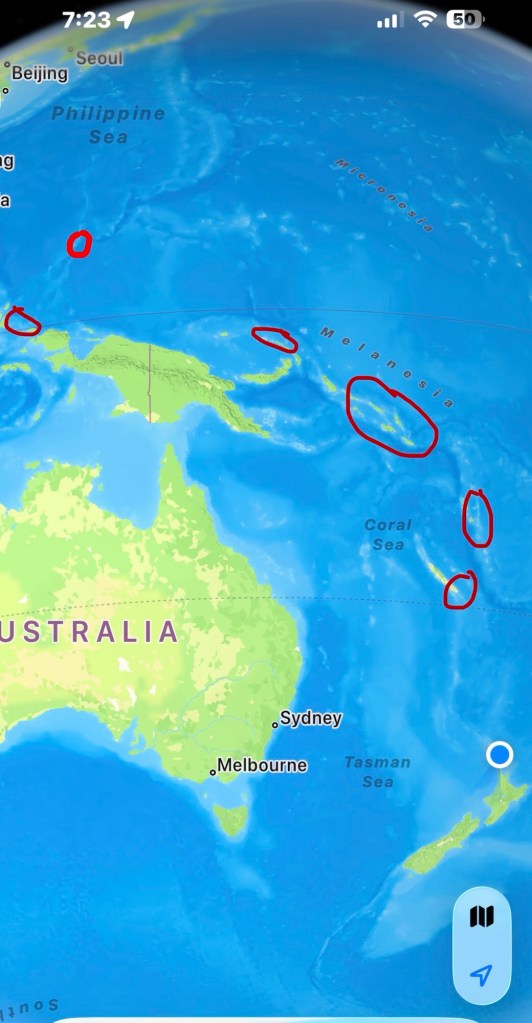
Our sail plans are fully packed for the season, including 5 maybe 6 Oceania countries. We will be returning to New Caledonia, as those were some of the clearest waters we have seen and has friendly turtles! 😁 Then we head to the marvelous Islands of Vanuatu. Our aim is to visit 5-6 new islands, each having a unique cultural Kastom (Ni-Vanuatu, a Bislama word for custom), dress, dance, and stunning blue holes. One tradition you may have heard of is the land diving of Pentecost, it’s called Naghol. (Research that one for a shocker) We then will clear out and check into the remote Island country of Solomons, a lot of rich WW2 history there. Moving north, we sail up and around Papa New Guinea, staying at the outer islands along the way. A slight possibility is to head to a tiny, but stunning US Territory named Palau. Heading East to our final destination of 2026, Indonesia! Our cruiser friends out there have reported amazing things like such friendly people, yummy foods, and cheap prices. Raja Ampat will be our highlight destination, so we will stay there for as long as possible. A much needed flight to the states will also happen in there somewhere.

Thanks for staying connected and joining us online for this sailing travel adventure! If you want to see some of our past experiences, our YouTube channel has 60 sailing videos and 27 yoga videos for anyone interested.

@Kaleasailingadventure

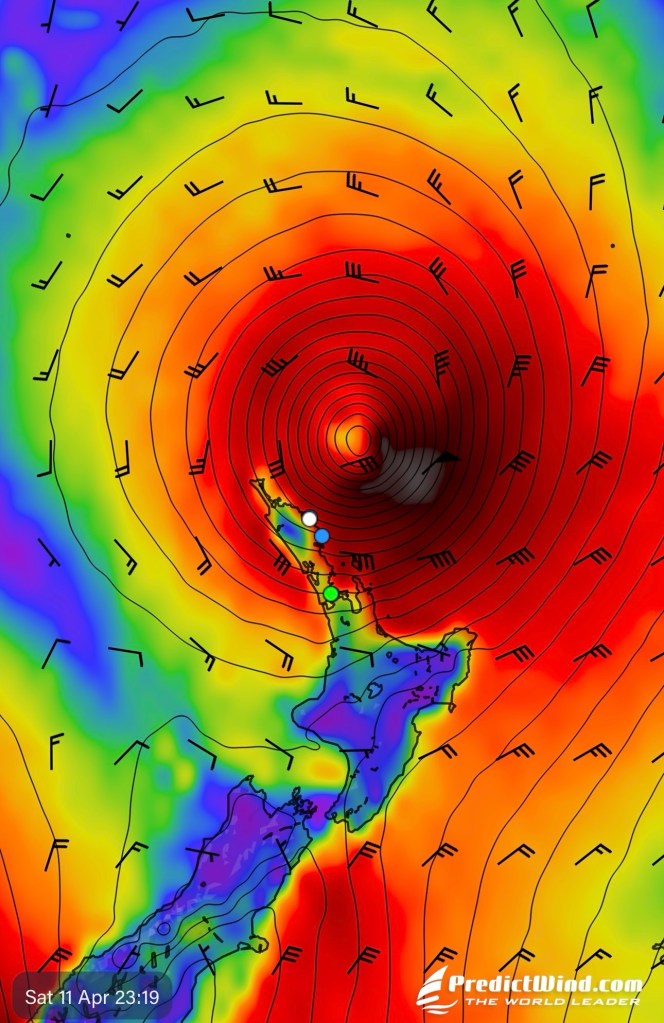
Cyclone Vaianu, hits Northland, New Zealand

Thank you for all the safety wishes as Cyclone Vaianu clipped Fiji then went to northland, New Zealand. It was as a large, powerful and potentially historic systems. There were good chances the north island was to get a direct hit, with winds at 60-70 knots, but all we saw was 53 knots. Not any problems really, just a lot of wind and rains for 2 days.

So, what did that mean for Kalea? We of course had to stow all gear, and watched the weather regularly all week. We tucked into a local favorite hide an away, in Opunga Cove in the northland in the Bay of Islands. The choice for us was at anchor in a snug hurricane hole, on a mooring ball or at a dock in Opua Marina. Neither of these options are were great, but we felt the safest at anchor and we were ready for whatever may occur.

Cyclone Vaianu, turned into category 3 with winds building as it went south. The worst part for us, besides being trapped inside for a few days is the sideways rain. This can sometimes blow under our hatches, creating moisture inside the cabins, but only in big gusts. In addition to all the prep work, we decided to wrap a halyard around our furling jib, extra protection is always good.

Funny, we came to New Zealand because it’s supposed to be out of the typical storm region. 🤷 (reminds me that I need to go reread my insurance policy, lol) We love weather in general and enjoy seeing the awesome power of Mother Nature. As much as many feel we are crazy, these were very interesting times. What does tend to get me down though is the days and days of rain. We really questioned coming back to New Zealand this year because of how wet April was last year. Oh well, only a few more weeks till the tropics.

Anyway, there is a lot of land between us and the reported 24 foot seas off shore. The land also knocks down much of the wind velocity other than gusts that make their way around the mountains.

We met some new friends who reached out on Facebook who are anchored right next to us. Too funny! And another new friend called us on the vhf, a rare occurrence these days, and mentioned they are good and making up some afternoon South African pancakes. I often make ham, avo, tomato sandwiches for lunch and spent the afternoon working my 1000 piece puzzle. We sure thank you all for your support and kindness, 🥰 less lonely this way. All is well.

Wildlife of Eastern Australia

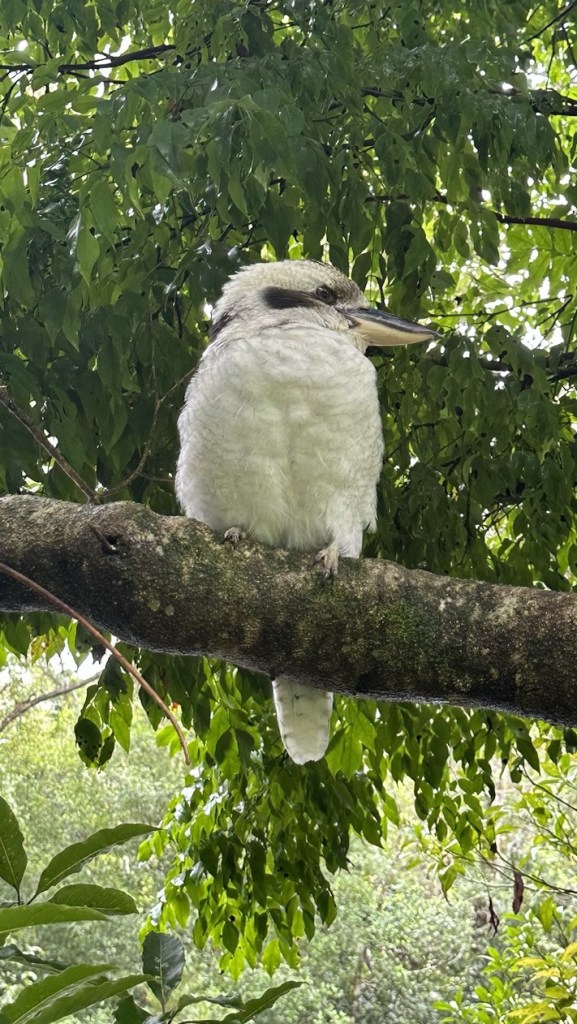
The crazy Kookaburra

🦅 As a bird lover, I was enthralled by the Birdsong of Eastern Australia. If you are like me, you may know the app Merlin Bird ID, which has helped me identify birds by song or photo. I have used this app all over Mexico, Pacific Islands, New Zealand and now Australia! Such fun! Listen to the below videos, you can hear my favorite; the Australian Magpie. We saw a lot of them, usually in pairs, and typically very friendly, even eating a peanut out of Scott’s hand, while we camped out in rural areas. Their inquisitive eyes and slight turn of the head makes you think how smart they are. The other favorite of ours of course, is the laughing Kookaburra. Not only do they laugh loudly like monkeys, they are friendly, silly and so curious! Remember the old camp song “laugh kookaburra, laugh kookaburra…”

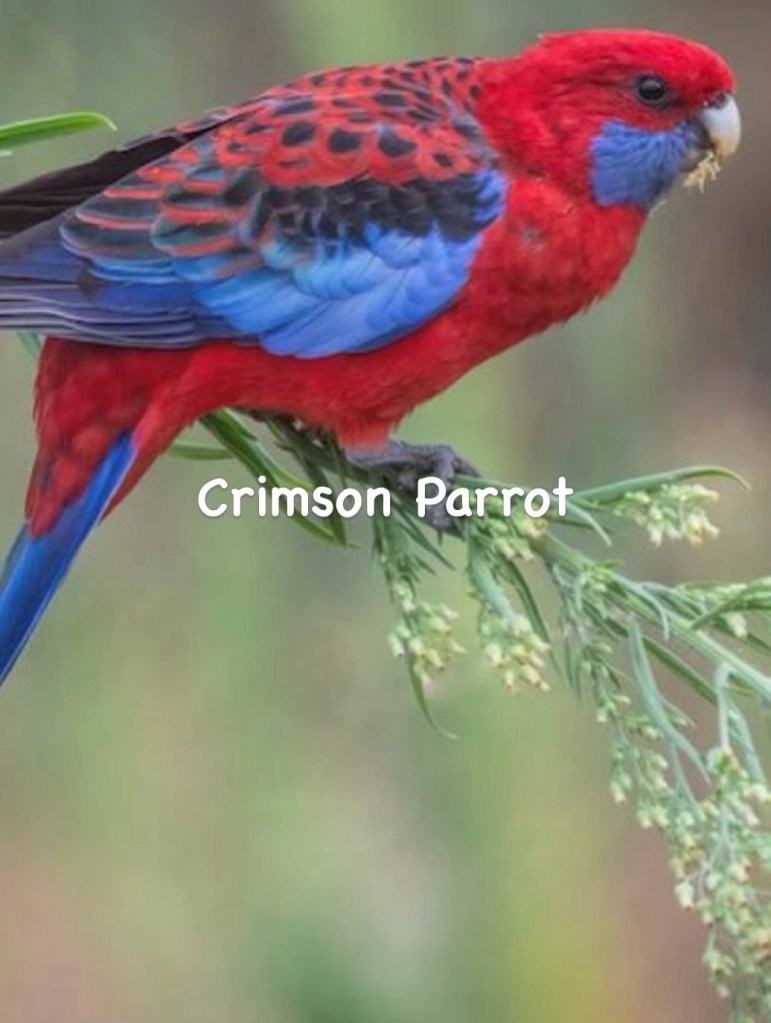
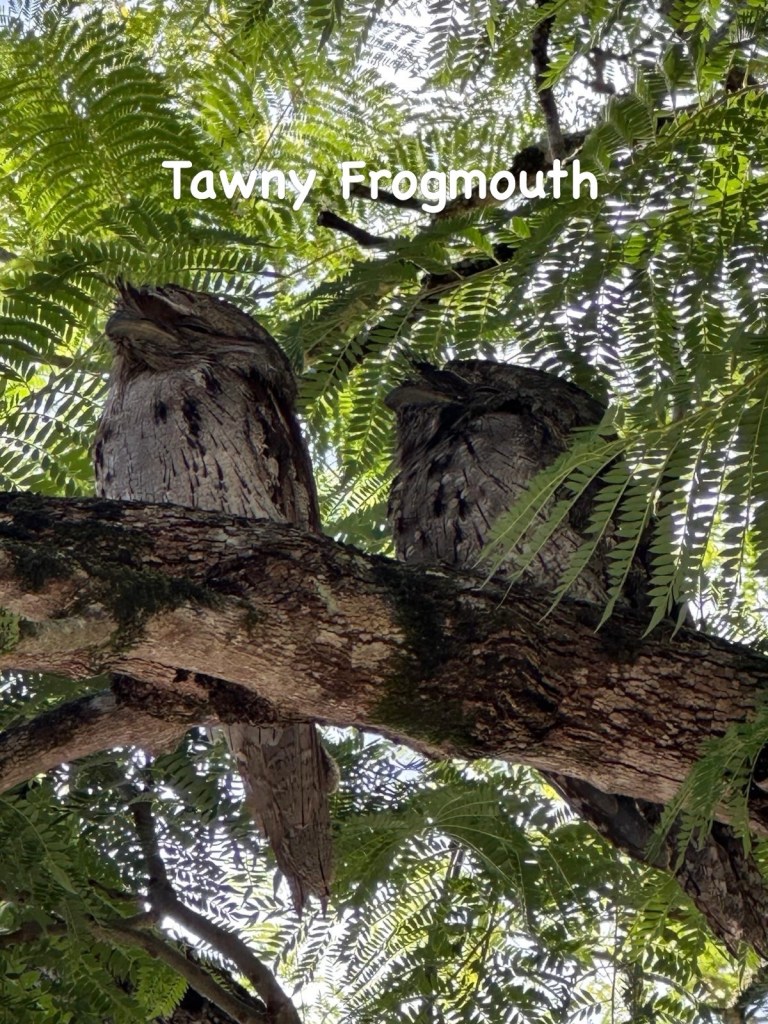
Now, the most colorful, by far is the crimson Rosella Parrot, brilliant crimson red head and breast. We were very lucky to see two pair swoop down for a drink in the river. Such colors! The funniest looking was definitely the nocturnal Tawny Frogmouth. While visiting the tiny town of Tyalgum for a day, a local elderly man pointed out a sleeping pair in a roadside tree. Shaggy camouflaged faces blended right in with the tree bark. 🤣 And, of course there are the small, sweet, crested pigeons, with rainbow wing feathers, but they sound like a small owl.

We had the chance to explore some Australian National Rainforests. Yes!!! Australian rainforests.
We too never imagined Australia having a rainforest. All we knew were the Crocodile Dundee movies (we all grew up with) and something about a dingo getting the baby. Lol

Anyway, the Springbrook National Forest is about 3300 feet and at 28 degree latitude south. Weird really as it looks to be a mountainous forest like California but the underbrush is filled with palms and ferns. Very lush and typical of a forest at 28 degrees south I guess. 🤷
We were hiking after a huge rain so the waterfalls were running strong and we found time to take our showers. 🙂 Although it was rainy, the water and outside temperatures were about 80 degrees.

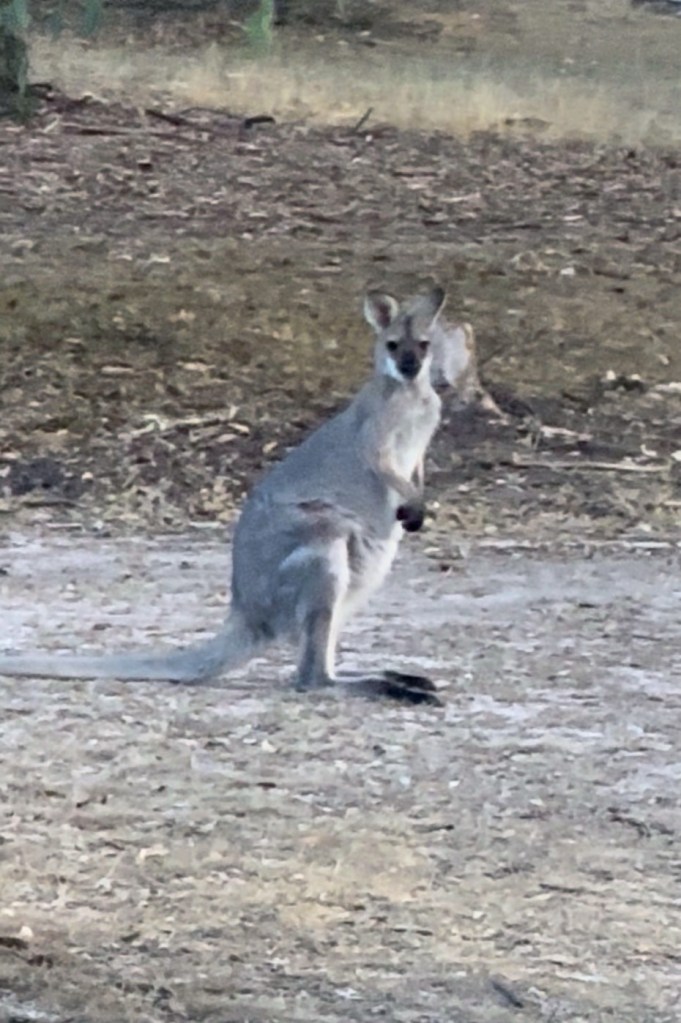
We then explored a bit west of the green lush coast, as we wanted to find some desert and Kangaroo’s. We didnt go north far enough to see Crocodile’s though, no need to camp near those rivers! Can you imagine the fear about going pee in the night?

Warning! Some material in the rest of this post may make you squirm. Dont watch the below video if you don’t like creepy crawling things. 🙂Kathy found a little friend at the end of the hike. Beware, it’s gross!

Australia has been nothing like we expected. Green and lush countryside welcomed us as we drove up the coast from Sydney to Brisbane.
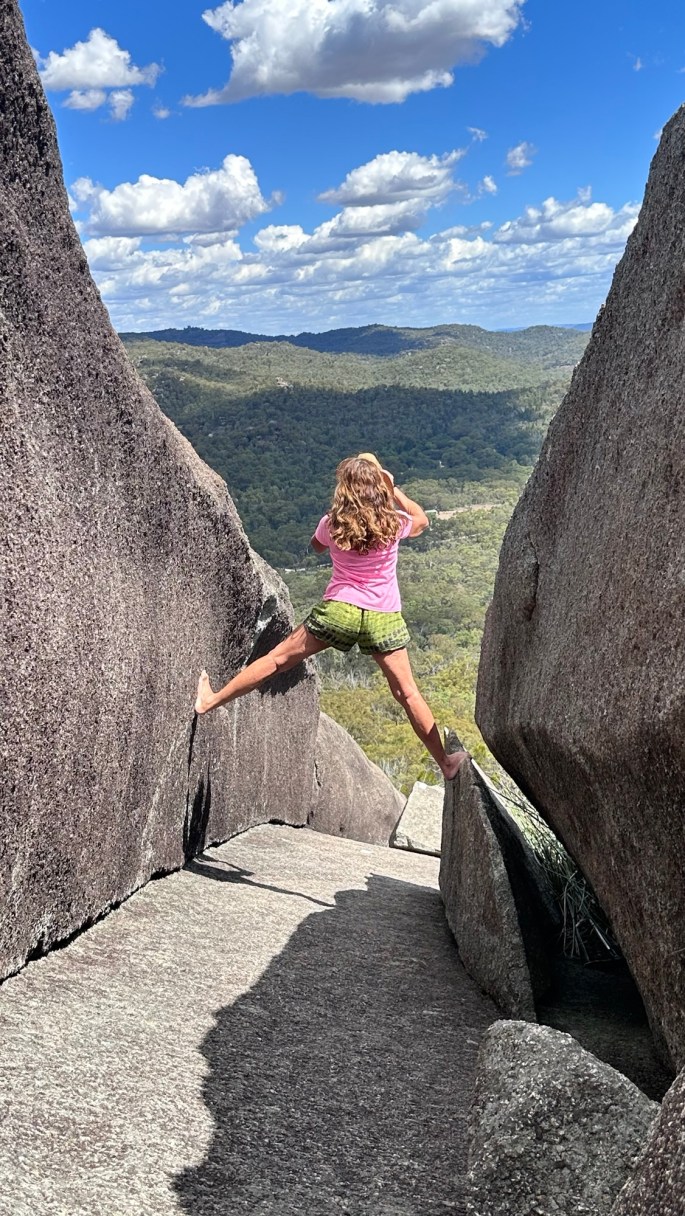
We’ve seen, Koalas, Wallaby’s, Water dragons, Kookaburras, Huge Cockatoo’s, Green Parrots, Bush Turkeys, Lamington Spiny Crayfish and a whole host of wild Mushrooms. Hiked the spectacular Granite dome called the Pyramid.

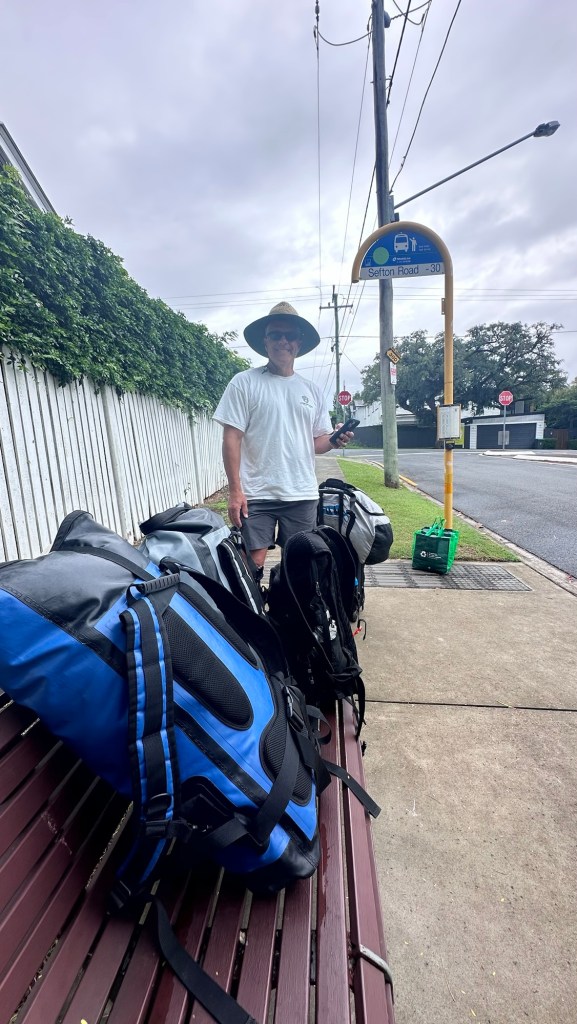
Many, many busses

After the final 3 weeks in a van, some great days and some hard days in the rain, we are flew back to New Zealand to finish up the cyclone season. Kalea has new bottom paint so we will splash her later this week.

A paint job for our Catamaran, Kalea. Scott and Kathy go camping then fly to Australia to do van life adventure.

Time to haul our Catamaran out of the water for the routine, every 2 year bottom paint and zinc replacements. It’s always a good idea to check props, rudders, dagger boards, through hulls, sail drives and overall condition of our hulls. We chose the popular area of Whangerei, New Zealand to do this work, as well as park her on the hard for a month while we explore and adventure inland, and then travel to Australia.

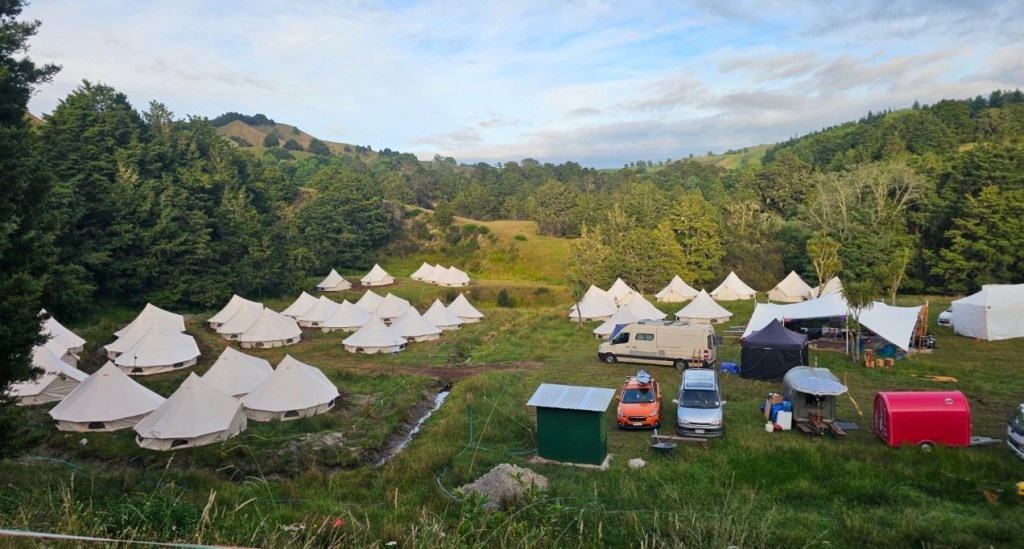
Our first land experience in NZ was a music/yoga dance weekend festival, in the rolling hills and forests south of Auckland. This was an amazing weekend making new Kiwi friends, attending in depth workshops, and dancing to wild music till the early hours. However, the NZ rains and winds moved in and drenched us, our camping gear and all of our bedding. The long, hilly, muddy path to the main festival area had nearly washed away. So, we slipped and slid over the river and through the woods, carrying all our gear barefoot (as our shoes would be stuck deep in the mud). We hauled everything, our food and gear to a small yurt which was nicely given to us. Also, new bedding was kindly donated to us by new friends. Our crazy weekend continued and fun memories were made.

These were the dry Yurts

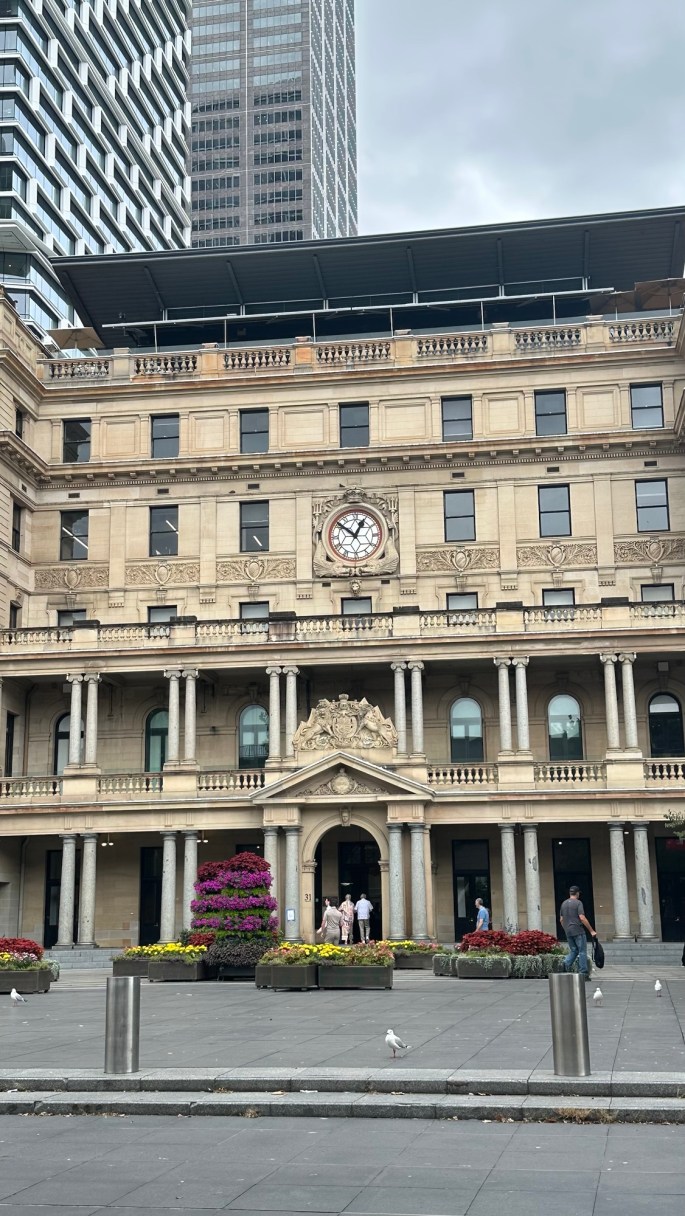
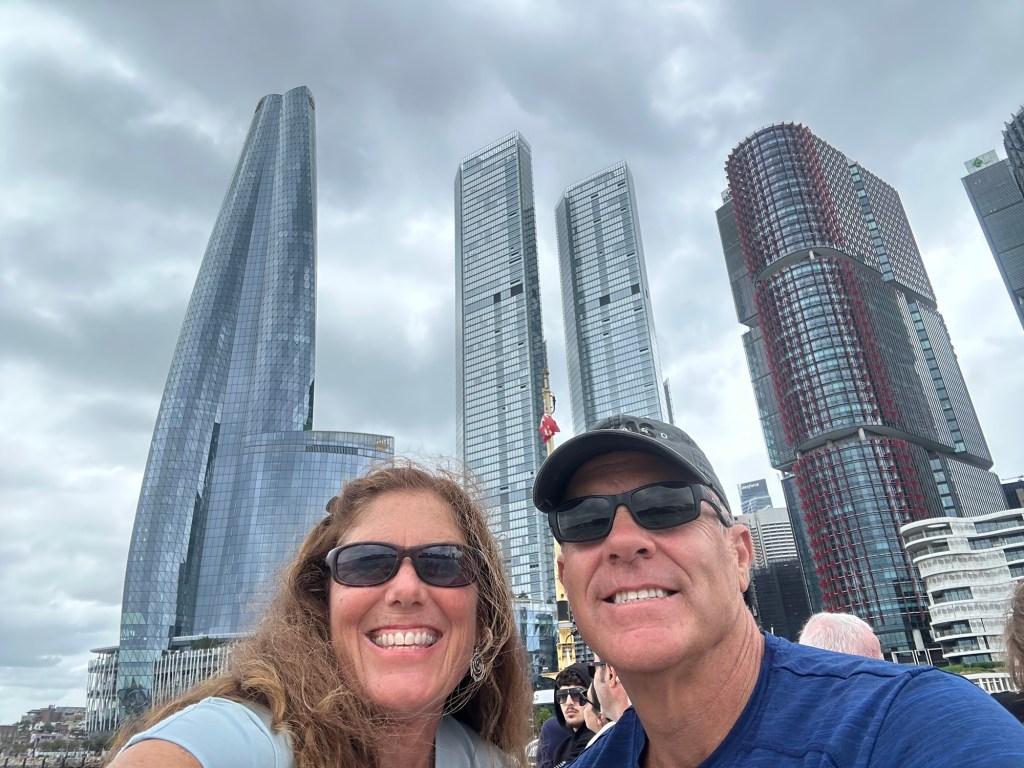
Next adventure had us flying to Sydney, Australia, to visit a new country. We got to experience the massive city of Sydney and many iconic points of interest. This city is supposedly ranked number 12 in the world for overall high quality of life. Agreed! It was friendly, safe and clean. The city was beautiful, and so easy to get around. Well known for its ferries, we made this our primary source of travel, besides our feet. Very cheap, only $9 AU per day for unlimited on and off!

The Sydney Fish Market was rebuilt and only opened last month. Tons of local fish, oysters lobsters, squid…. Quite an operation.

After a few days in the big bustling city, we needed more space and nature so we ventured north. A great sailor friend we made last year stays in Brunswick Heads on his boat for cyclone season. He invited us to stay the week and get a taste of the local hippie vibe. Thank you, Thomas on Ananda!